Under-sink filter review
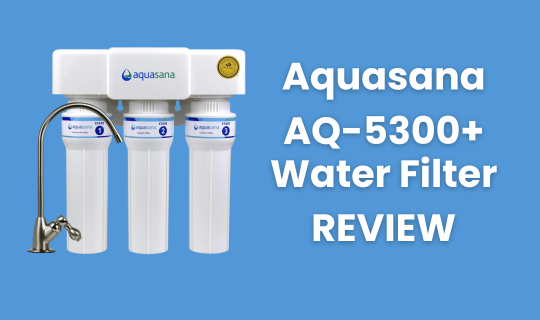
Aquasana AQ-5300+ Max Flow Review
A fast-flow under-sink filter built for better taste and certified contaminant reduction.
Best for
- Municipal water and chlorine taste
- Lead and PFAS concerns from plumbing or local reports
- People who want good flow without a tank
Skip if
- You want fluoride removal
- You need water softening or big TDS reduction
- You’re treating microbiological issues
Access to clean drinking water should be a given. With growing worries about water pollution across America, finding a dependable filtration system has become a necessity for many households. The Aquasana AQ-5300+ Max Flow offers superior filtration with quicker water delivery, but does it deliver on these promises?
This detailed review will help you decide if the AQ-5300+ is the right fit for your needs and budget. I’ll go over everything from what it filters to how much maintenance it requires, so you have all the information you need before you buy.
What’s Inside the Aquasana AQ-5300+ Max Flow System?
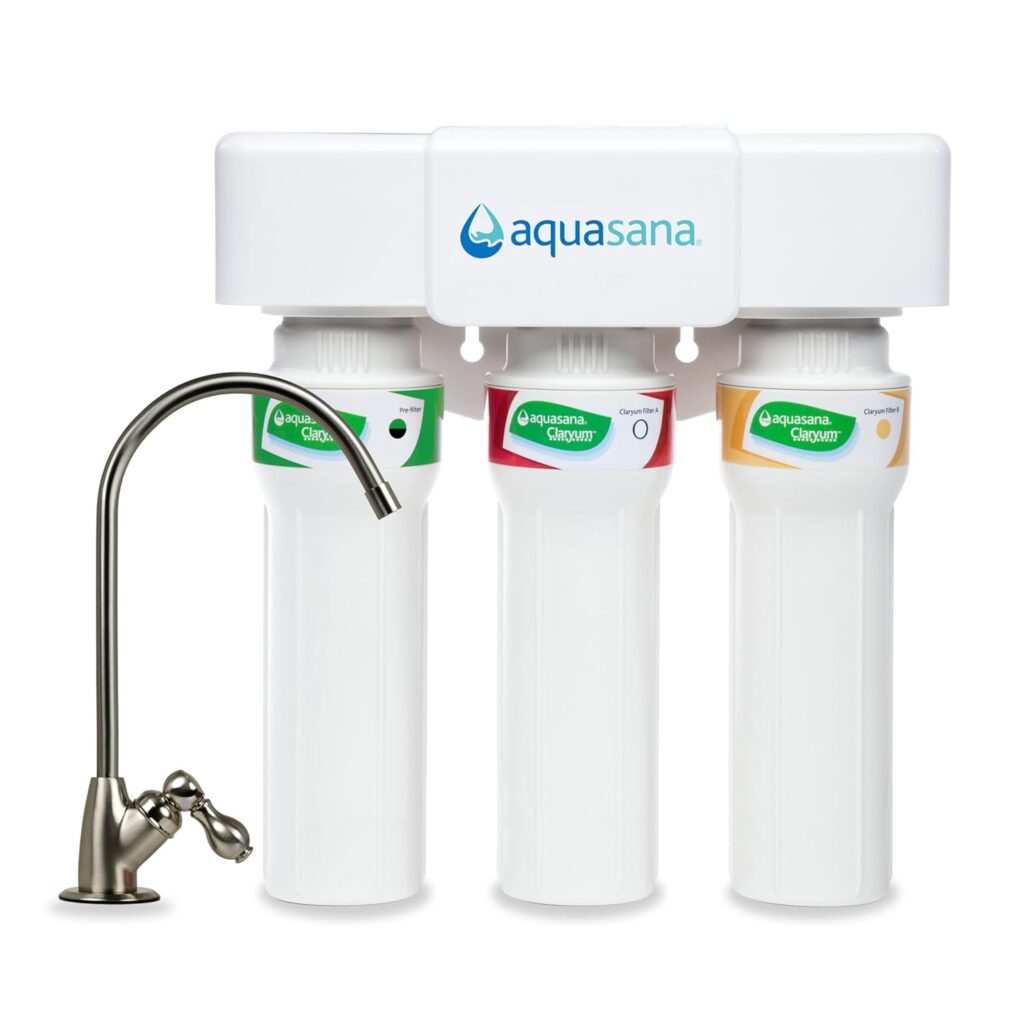
Inside the AQ-5300+ Max Flow System, you’ll find a sleek design that houses three cylindrical filter cartridges. These are arranged in a parallel configuration to maximize filtration and minimize space under your sink.
The system includes a dedicated faucet (available in various finishes), all the hardware you need to install it, and your first set of filters. The build quality stands out right away. The mounting bracket feels sturdy, and the faucet is solid metal. This suggests that it’s likely to last longer than the typical 6-month filter replacement cycle.
Three-Stage Filtration System
At the core of the AQ-5300+ is a three-stage filtration system that uses Aquasana’s Claryum technology:
- The first stage is a 20-micron pre-filter that catches sediment, rust, and larger particles that could clog the more specialized filtering media.
- The second stage uses activated carbon from coconut shells to effectively address chlorine, chemical compounds, and organic contaminants that affect taste and odor.
- The final stage combines catalytic carbon, ion-exchange, and sub-micron mechanical filtration to target heavy metals, pharmaceuticals, and microscopic contaminants.
The layered approach lets each filter concentrate on specific pollutants, leading to more comprehensive filtration without considerably limiting water flow.
The parallel layout of the filters is a crucial design enhancement from previous models, letting water flow through all three filters at the same time instead of one after the other.
Design and Installation Specifications
The AQ-5300+ is a moderate-sized under-sink unit, measuring roughly 12″L x 4.25″W x 15.85″H.
To install, you’ll need to connect it to your cold water line and needs a hole at least 1/2″ in diameter for the included faucet if your sink doesn’t already have a pre-drilled accessory hole.
The system runs purely on water pressure and doesn’t need electricity, making it flexible for various installation situations. One design drawback to note is that you’ll need space around the filters to change them every six months.
For a broader perspective on water filtration options, you might want to check out this Aquasana countertop water filter review.
Specifications of Aquasana AQ-5300+ Max Flow:
The Aquasana AQ 5300 has the following specifications:
- Flow Rate: About 0.72 gallon per minute, or 2.7 liters per minute
- Filter Capacity: 800 gallons per filter set, or 3,028 liters
- Filter Lifespan: Roughly six months for the average household
- Operating Pressure: 20 to 80 psi
- Operating Temperature: 40 to 90 degrees Fahrenheit, or 4.4 to 32.2 degrees Celsius
- Dimensions: 12 inches long, 4.25 inches wide, and 12.88 inches high
- Certifications: NSF/ANSI Standards 42, 53, 401, and P473
See full information on Amazon
The Aquasana AQ 5300 is also known as the “Max Flow” because it is a significant improvement over previous models from Aquasana. The AQ 5300 delivers filtered water at a rate of 0.72 GPM, which is much faster than many other under-sink systems.
This is a practical benefit that really shows up in day to day use. For example, filling a water bottle only takes a few seconds, rather than the long wait that is common with slower filtration systems. The increased flow rate does not compromise the quality of the filtration. The AQ 5300 still removes up to 99% of targeted contaminants.
The Aquasana AQ 5300 Water Filter performs best within the normal water pressure range for homes, which is between 20 and 80 psi. If your water pressure is at the very high or very low end of this range, the filter may not work as well.
This filter also can’t be installed on hot water lines because the heat can damage the filter and make it less effective. This is a common limitation of carbon-based water filters.
What Does the AQ-5300+ Really Filter Out of Your Water?
The Aquasana AQ-5300+ has filtration abilities that go well beyond just removing chlorine.
Laboratory tests show that this system can reduce 78 different contaminants that are often found in city water supplies. What’s really impressive is the range of protection – it can filter everything from industrial chemicals to pharmaceutical residues – and it does all this while leaving in the beneficial minerals that many other systems remove.
One of the first things you may notice is a big improvement in taste, smell, and clarity. The difference is obvious compared to unfiltered tap water, especially when brewing coffee where subtle chemical flavors can affect the taste.
Lowering Lead and Heavy Metals
Lead contamination is still a major issue in many homes in America, especially those with older plumbing systems.
The AQ-5300+ is certified to lower lead by up to 99%, dealing with both particulate and dissolved forms. This performance goes beyond the recommendations of the EPA and offers important protection, particularly for households with children, pregnant women, or elderly residents who are at a higher risk of health issues from exposure to lead.
The Aquasana AQ 5300 Water Filter is impressively effective at eliminating not just lead, but other heavy metals as well, such as mercury (~99.5% reduction). This is especially helpful in places with old infrastructure or regions where natural deposits result in high levels of metal in the water.
The Claryum technology’s ion exchange component, which is not found in basic carbon filters, is specifically designed to target these dissolved metals.
Elimination of PFAS and Emerging Contaminants
The most significant advantage of the AQ-5300+ is its certified ability to remove per- and polyfluoroalkyl substances (PFAS). These “forever chemicals” have been making headlines as they are found in water supplies all over the United States. The NSF/ANSI P473 certification verifies that this system reduces PFOA and PFOS, which are two common PFAS compounds.
Moreover, the Standard 401 certification tackles new contaminants such as pharmaceutical residues, specific pesticides, and BPA.
These substances, even though they are present in small amounts, are becoming more and more concerning as studies continue to uncover potential health effects. Not many filtration systems at this price point provide confirmed protection against this class of contaminants.
Improving Chlorine Levels and Taste
Many people find the most immediate benefit of the system is the 97% reduction in chlorine. Chlorine is added to water by municipal water providers as a disinfectant, but it can cause water to have an unpleasant taste and smell.
The activated carbon stage of the system effectively deals with this problem, and it also captures volatile organic compounds (VOCs) that can have a negative impact on the quality of the water.
The AQ-5300+ doesn’t just remove the bad stuff; it also keeps the good stuff. Unlike reverse osmosis systems, the AQ-5300+ keeps beneficial minerals like calcium and magnesium that contribute to water’s natural taste. As a result, the water tastes clean and doesn’t have the flat, empty taste that overly purified water sometimes has.
What It Doesn’t Do
Even though the AQ-5300+ is a comprehensive water filter, there are some things it can’t do. For instance, it can’t filter out dissolved solids like salt, so it’s not the best choice if you need to soften hard water or treat brackish water. The system also doesn’t filter out fluoride. Some people want to reduce the amount of fluoride in their water, while others see it as a good thing.
If you’re worried about bacteria in your home’s water, you should know that the AQ-5300+ doesn’t have a certification for biological pollutants. The sub-micron filtration can decrease some cysts, but this system isn’t designed to treat water that has known microbiological risks. In these situations, UV purification or systems that have been specifically certified for bacterial reduction would be better.
How to Install the AQ-5300+ Water Filter
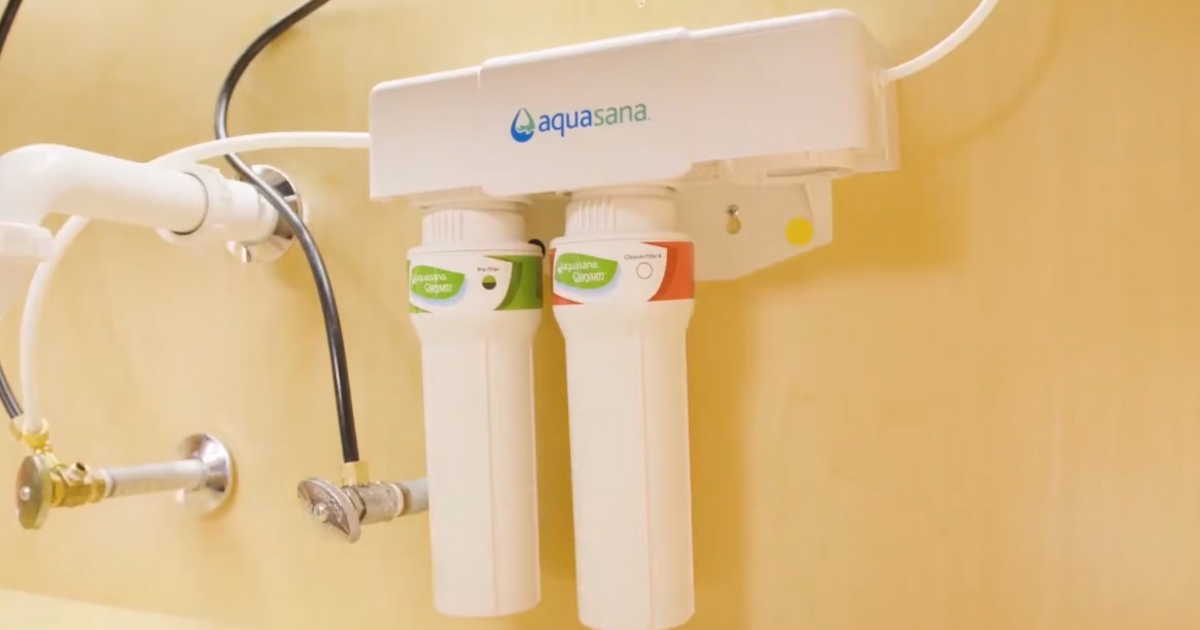
Setting up the AQ-5300+ is a fairly straightforward DIY task that the average homeowner with a little bit of plumbing know-how can complete in 1-2 hours.
The box comes with everything you need: detailed installation instructions, mounting hardware, and all the necessary parts, including a dedicated faucet. The trickiest part is usually drilling the hole for the faucet if your sink doesn’t already have a hole. Aquasana includes a helpful installation guide with step-by-step pictures that make the whole process a lot easier.
Once you’ve installed the system, you’ll need to run water through it for around 10 minutes to get rid of any carbon fines and properly activate the filtration media.
Do-It-Yourself vs. Hiring a Pro
Although having a professional install your AQ-5300+ guarantees it’s set up correctly, the filter’s simple design allows do-it-yourselfers to install it with a few basic tools. You’ll need an adjustable wrench, screwdriver, drill with 1/2″ and 1-3/8″ bits for the faucet installation, and plumber’s tape. Professional installation usually runs between $150-300 depending on where you live, so doing it yourself can save you a lot of money.
For those who are not comfortable with drilling into their countertop or sink, or if your plumbing setup is non-standard (like solid metal pipes instead of flexible supply lines), you might want to consider professional installation. Many plumbers can get the job done in less than an hour, so it likely will not disrupt your kitchen too much.
What You’ll Need to Install
You’ll need to make sure you have enough space under your sink to fit the system. It’s about 13″ tall and 13″ wide, and you’ll need about 5″ of depth to fit it in.
The best place to install it is on the back or side wall of the cabinet. This will make it easy to change the filters when you need to. The bracket that holds the system in place needs about 4″ of vertical wall space. Also, keep in mind that the system will weigh about 10 pounds when it’s full of water, so the bracket needs to be able to hold that much weight.
Aside from the physical space, you’ll need a few basic tools such as an adjustable wrench, Phillips screwdriver, electric drill with the right bits for faucet installation, and plumber’s tape to seal threaded connections. It’s also a good idea to have a bucket and towels ready to catch the small amount of water that will be released when you connect to your existing plumbing.
Space Requirements for Installation:
- Height: 13 inches minimum
- Width: 13 inches minimum
- Depth: 5 inches minimum
- Faucet Hole: 1-3/8 inches in diameter
- Space for Wall Mounting: 4 inches vertical clearance
- Room for Access: Allow 3-4 inches around filters for replacement
Step-by-Step Installation of the Aquasana AQ-5300+ Water Filter
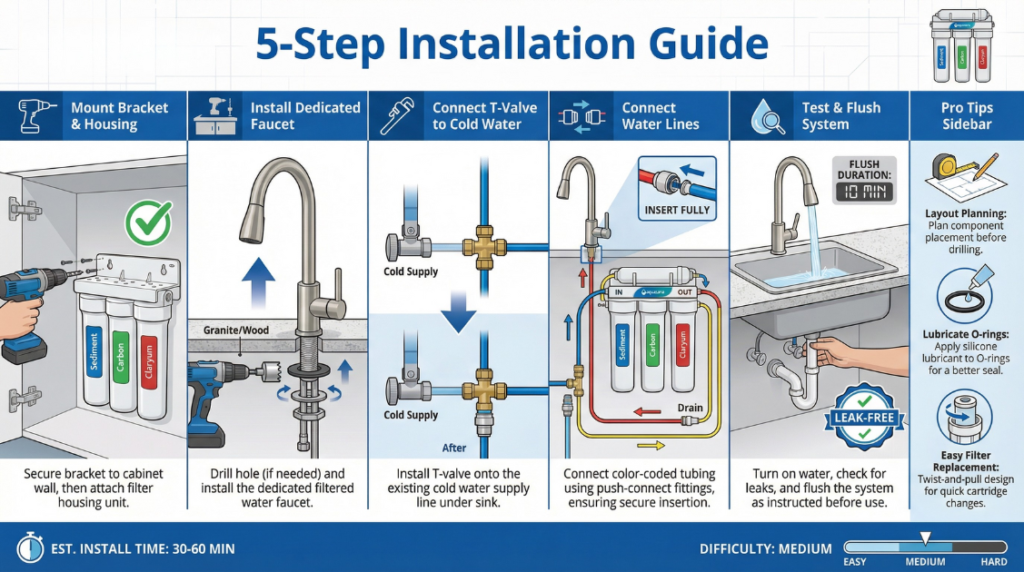
The installation process starts with mounting the bracket to the wall of your cabinet and attaching the housing for the filter.
After that, you’ll install the faucet that is dedicated (which requires a hole to be drilled if one isn’t already there), followed by connecting the line for the cold water supply using the T-valve that is included.
The last steps involve connecting the lines for the water between the components and testing for leaks before the system is flushed. Most users find the tubing that is color-coded and the fittings that are push-connect to be intuitive, though care must be taken to fully insert the tubing to prevent leaks in the future.
Long-Term Costs and Filter Replacement
The AQ-5300+ has a total cost of ownership that goes beyond the initial purchase price. This is because you need to regularly replace the filters.
The recommended replacement interval is 6 months or 800 gallons. This means that a typical household will need two filter sets a year. The official Aquasana replacement filters (model AQ-5300R) cost around $80 per set. This means that the annual maintenance cost is around $160. This works out to about $0.10 per gallon of filtered water.
Although you can buy third-party filters that are compatible and cost less, they may not have the same certifications as the original Aquasana filters. Something to keep in mind.
First-time Cost vs. Other Systems
The AQ-5300+ is priced in the middle for under-sink filters. With a price tag of around $189-250 (depending on the faucet finish), it costs more than basic carbon filters ($50-100) but a lot less than reverse osmosis filters ($300-500). This is because it offers a more thorough filtration and a higher flow rate than cheaper filters.
If you’re looking at value for money, you should know that similar systems that have NSF certifications for lead, PFAS, and pharmaceuticals usually cost between $50 and $100 more than the AQ-5300+. The system’s value becomes especially noticeable when you compare the certified contaminant reduction capabilities per dollar spent, where it gives you a lot of bang for your buck.
If your household is currently buying bottled water, you’ll start to see the financial benefits within the first year. Assuming a conservative cost of $1 per gallon for bottled water, the AQ-5300+ can pay for itself in 3-6 months of regular use, with ongoing savings after that.
Yearly Cost Comparison (Based on 1,500 gallons/year):
- Aquasana AQ-5300+: $160 (only for filter replacements)
- Bottled Water: $1,500 (at $1/gallon)
- Basic Carbon Filter: $100-120 (frequent replacements)
- Reverse Osmosis: $100-150 (includes membrane and filters)
- Water Delivery Service: $600-900 (5-gallon containers)
Continuous Maintenance Costs
Aside from filter replacements, the AQ-5300+ needs little maintenance, with no electricity costs or waste water production (unlike reverse osmosis systems which typically waste 3-4 gallons for each gallon produced).
The durable construction suggests a system lifespan of 5-10 years before any components beyond filters might need replacement. The included faucet features ceramic disc valves rather than rubber washers, reducing the likelihood of leaks or failure points that would require additional expense.
One cost to keep in mind is the potential water damage from leaks if the filters aren’t installed correctly. It would be a good idea to invest in a water leak detector from Amazon as a safeguard against this risk.
Also, some people might want to buy a filter wrench to make cartridge changes easier, even though the system is designed to be serviced without the need for specialized tools.
Comparing the AQ-5300+ to Other Water Filters
There are many water filters on the market today, and each one has its own set of pros and cons. To figure out if the AQ-5300+ is the right water filter for you, it helps to compare it to other options. While there’s no one-size-fits-all water filter, the AQ-5300+ is a well-rounded option that tackles most of the common issues without any major downsides.
When looking at different options, it’s important to not only consider the initial cost but also what kind of maintenance is required, how well it can reduce contaminants, if it wastes any water, and if it has any impact on beneficial minerals. These are all factors that will determine the real value of the filter and if it’s the right fit for your home’s specific water quality needs.
How Does It Compare to Reverse Osmosis Systems?
Reverse osmosis (RO) systems are generally more effective at filtering out impurities than the AQ-5300+.
They are especially good at removing dissolved solids, fluoride, and some of the more difficult to remove contaminants. However, this improved filtration comes at a cost. RO systems waste 3-4 gallons of water for every gallon they produce. They also remove beneficial minerals from the water, which sometimes necessitates the addition of minerals back into the water.
Furthermore, RO systems usually have slower flow rates and require a storage tank, which takes up valuable space under the sink.
If you have a particularly contaminated water source or health concerns that necessitate the greatest possible reduction in contaminants, RO may be worth these drawbacks.
However, for most people who use municipal water, the AQ-5300+ under sink water filter system is a more practical option. It removes contaminants that are significant to health while keeping minerals, operates without wasting water, and provides filtered water at higher flow rates without the need for a tank.
Comparison with Pitcher Filters
Even though pitcher filters are simple to use and inexpensive initially, they do not match the AQ-5300+ in terms of filtration capabilities and ease of use.
While high-quality pitcher filters can eliminate chlorine and some heavy metals, very few provide certified protection against the broad range of pollutants that the AQ-5300+ does. Furthermore, pitcher filters need to be refilled frequently, take up space in the refrigerator, and usually need to be replaced every 40-80 gallons – much more frequently than under-sink systems.
It becomes especially clear how convenient this filter is when you use it every day – you can have filtered water right away without having to wait for it to be filtered or having to refill anything.
If your household uses more than 2-3 gallons of filtered water every day, the AQ-5300+ starts to make a lot more sense, even though it costs more up front. The only time a pitcher filter might be a better deal is if you don’t use a lot of filtered water or if you only need a filter for a short time.
AQ-5300+ Compared to the Upgraded AQ-6300M Model
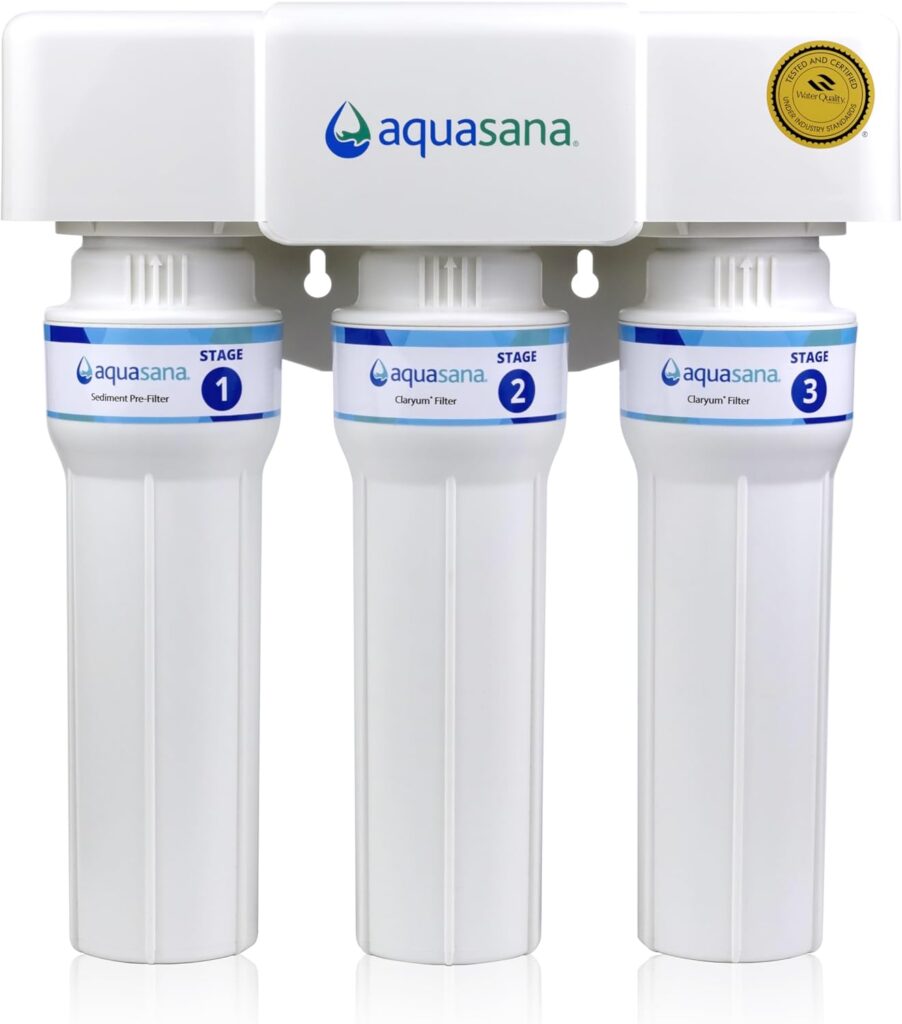
The AQ-6300M is Aquasana’s upgraded model and it offers a few improvements over the AQ-5300+.
For one, it has a more streamlined design. Both models use the same Claryum filtration media, have the same flow rate and have similar certifications, so the filtration technology hasn’t changed much. The AQ-6300M does offer a few new features though, like toolless filter changes, a performance monitor light, and a sleeker design that takes up less space.
For the majority of consumers, these small enhancements may not warrant the slightly higher price tag of the AQ-6300M. The AQ-5300+ continues to provide great value with virtually identical filtration performance. However, if you prioritize easy filter changes or have limited under-sink space, the benefits of the newer model may be worth the extra expense.
Is the AQ-5300+ Right for You?
The AQ-5300+ isn’t a one-size-fits-all solution, but it is perfect for certain types of households. You need to consider whether your water usage and conditions match up well with this system’s strengths before deciding whether it’s worth the cost.
In saying that, these are the types of households that get the most out of this water filtration system.
Optimum Water Conditions for the AQ-5300+
The AQ-5300+ is at its best when filtering municipal water supplies that, while meeting EPA standards, may still contain contaminants of emerging concern or aesthetic issues.
It’s a good fit for homes where there is a detectable level of lead (below acute levels), concerns about the taste/odor of chlorine, or PFAS contamination. The system also works well with moderately hard water (100-300 ppm) without needing any extra pretreatment.
If your water has extreme hardness (over 300 ppm), high sediment levels, or microbiological contamination, the AQ-5300+ is not a standalone solution and would need to be part of a larger treatment strategy. Likewise, if you’re looking for fluoride removal or a significant reduction in total dissolved solids, despite their drawbacks, reverse osmosis systems would be more suitable.
Final Thoughts: Should You Choose the Aquasana AQ-5300+?
The Aquasana AQ-5300+ proves to be a top choice for most homes that need thorough water filtration without the disadvantages of reverse osmosis. Its certifications for lead, PFAS, and emerging contaminants offer scientifically proven protection against the most concerning contaminants, while its selective filtration method keeps the beneficial minerals that give water its natural flavor.
The best thing about this system is its balanced approach – it tackles serious contaminants without wasting water, removes problematic substances while preserving beneficial minerals, and provides faster flow rates than many competing systems without sacrificing filtration quality.
For most households using municipal water supplies, these features result in meaningful improvements in water quality and taste at a reasonable cost per gallon. While specialized situations might benefit from alternative approaches, the AQ-5300+ is a carefully engineered solution that addresses the most common water quality concerns without introducing significant new disadvantages.
Frequently Asked Questions
How hard is it to change the filters in the Aquasana AQ-5300+?
Changing filters in the AQ-5300+ needs some handy skills but no special tools. You need to turn off the water supply, let off pressure using the specific faucet, unscrew the filter housings (which may need some strength at first), change the cartridges, and put the system back together. Most people finish the whole process in 10-15 minutes once they know the steps.
For first-time replacements, the process can be a bit more difficult because the housings can be tight from the factory installation. It can be helpful to have a small towel to improve grip and a shallow pan to catch any drips. Unlike some other systems, the AQ-5300+ does not require you to disconnect any tubing during routine filter changes, which reduces the chance of leaks when you put everything back together.
Does the Aquasana AQ-5300+ strip the water of good minerals?
No, the AQ-5300+ utilizes selective filtration technology to only remove contaminants, leaving beneficial minerals such as calcium and magnesium untouched. This is different from reverse osmosis systems, which remove almost everything from the water, including beneficial minerals that not only make the water taste better but could also have health benefits.
What are the differences between the AQ-5300+ and the newer AQ-6300M model?
The main differences between these two models are design improvements rather than basic filtration abilities. The newer AQ‑6300M has toolless filter replacement, a filter performance indicator light, and an updated manifold/faucet design. Both models use the same Claryum filtration technology, same flow rate, and have the same NSF certifications for reducing contaminants, so the choice is mainly between convenience features and cost savings.
How does the Aquasana AQ-5300+ stack up against whole-house water filtration systems?
- Whole-house systems filter all the water coming into your home, including water for showers, laundry, and toilets
- The AQ-5300+ provides more detailed filtration, but only at one point of use
- Whole-house systems usually cost $1,000-2,500 to install and offer less comprehensive contaminant reduction
- For the best protection, combine both approaches: use a whole-house system for sediment and chlorine and the AQ-5300+ for drinking water
- Whole-house filters usually require professional installation, while the AQ-5300+ is easy to install yourself
These systems are designed to complement each other, not compete against each other, in a complete water treatment strategy. Whole-house filtration ensures that every water outlet in your home provides better water quality. This is especially beneficial for people who are sensitive to chlorine and experience skin or respiratory irritation from shower water. The AQ-5300+ then provides additional “polishing” filtration specifically for drinking and cooking water, addressing contaminants that require more specialized filtration technology.
For those with severe water quality issues, a common solution is to use a two-pronged approach: a whole-house sediment and carbon filter for general use and point-of-use systems like the AQ-5300+ for drinking water. This allows for thorough filtration while keeping costs down by only using the more advanced filters for the water you drink.
This review is for informational purposes only. Water quality varies, so check current certifications and test results for your home.