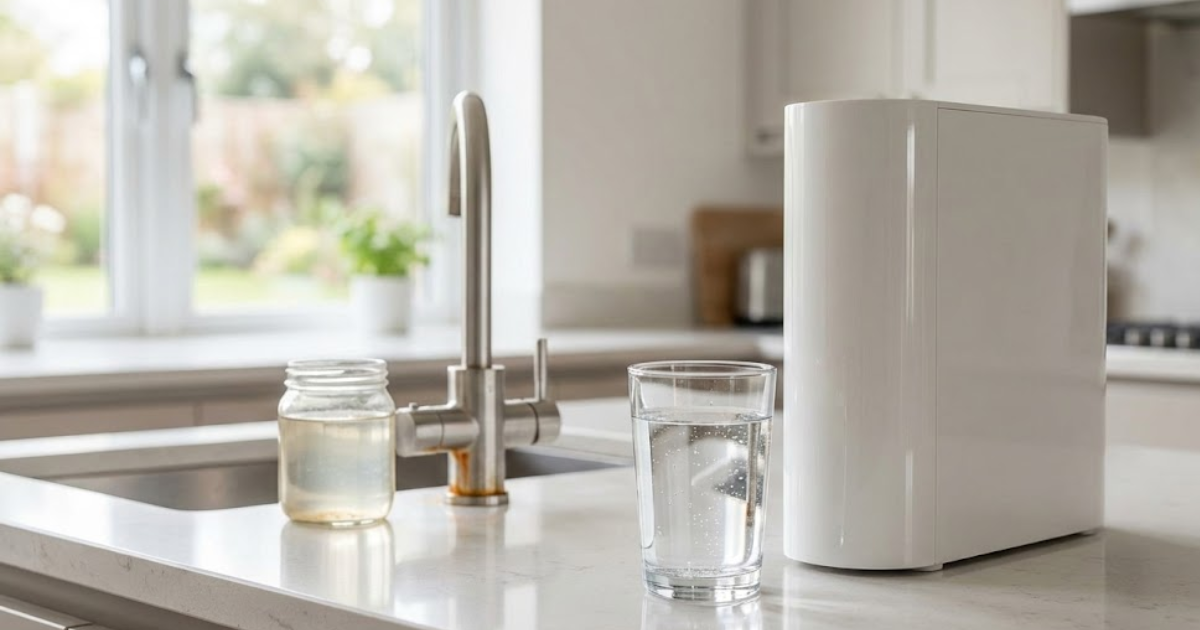
Orange stains creeping across bathroom fixtures, a faint rotten egg smell when the tap runs hot, or a water test flagging coliform sends most new well owners searching for answers fast. Moving into a well water home usually means dealing with at least one of these issues, and the quick fix many people reach for is a countertop filter that needs no plumbing work.
A countertop water filter sits on your kitchen counter and connects to your faucet or works through gravity. Some use reverse osmosis membranes to catch dissolved contaminants like PFAS and lead, while others rely on carbon and ceramic elements to improve taste and reduce sediment.
The picks below include countertop RO systems for bacteria and PFAS concerns, gravity filters for off-grid setups or renters who want zero installation, and options that pair with pre-filters when sediment clogs standard cartridges too quickly.
Short Answer: A countertop RO system is usually the safest pick for well water when your test shows higher-concern contaminants like PFAS, lead, or nitrates. If your goal is mainly taste and lighter sediment, a certified gravity system can work well, but it will be slower and won’t cover every dissolved contaminant.
Top 7 Picks
Best Overall
Aquatru Classic
Best for well water with bacteria, PFAS, or lead concerns
Check price on Amazon
Jump to review ↓
Best Countertop RO for Small Budgets
Dreo WF511 Countertop RO
Best when you want a countertop RO at a lower price point, and your well water is already reasonably pre-treated
Check price on Amazon
Jump to review ↓
Best Gravity Filter with NSF Certification
British Berkefeld
Best for renters, off-grid cabins, or anyone avoiding electricity and plumbing changes
Check price on Amazon
Jump to review ↓
Best for UV Plus RO Protection
SimPure Y7P-BW UV Countertop RO
Best for high bacteria concerns and you want both RO filtration and UV sterilization in one compact unit
Check price on Amazon
Jump to review ↓
Best for Fast Dispensing With No RO Wastewater
Aquasana Clean Water Machine
Best when the goal is better-tasting drinking water and contaminant reduction without RO’s wastewater or slow production
Check price on Amazon
Jump to review ↓
Best for Tiny Kitchens and Quick Setup
Brondell H630 Cypress Countertop System
Best when you want a countertop unit that attaches at the sink and doesn’t eat counter space like larger RO tanks
Check price on Amazon
Jump to review ↓
Best for RO Taste Upgrades
Bluevua Lite UV with Remineralization
Best for those wanting RO without the flat taste of demineralized water
Check price on Amazon
Jump to review ↓
Best Overall: Aquatru Classic
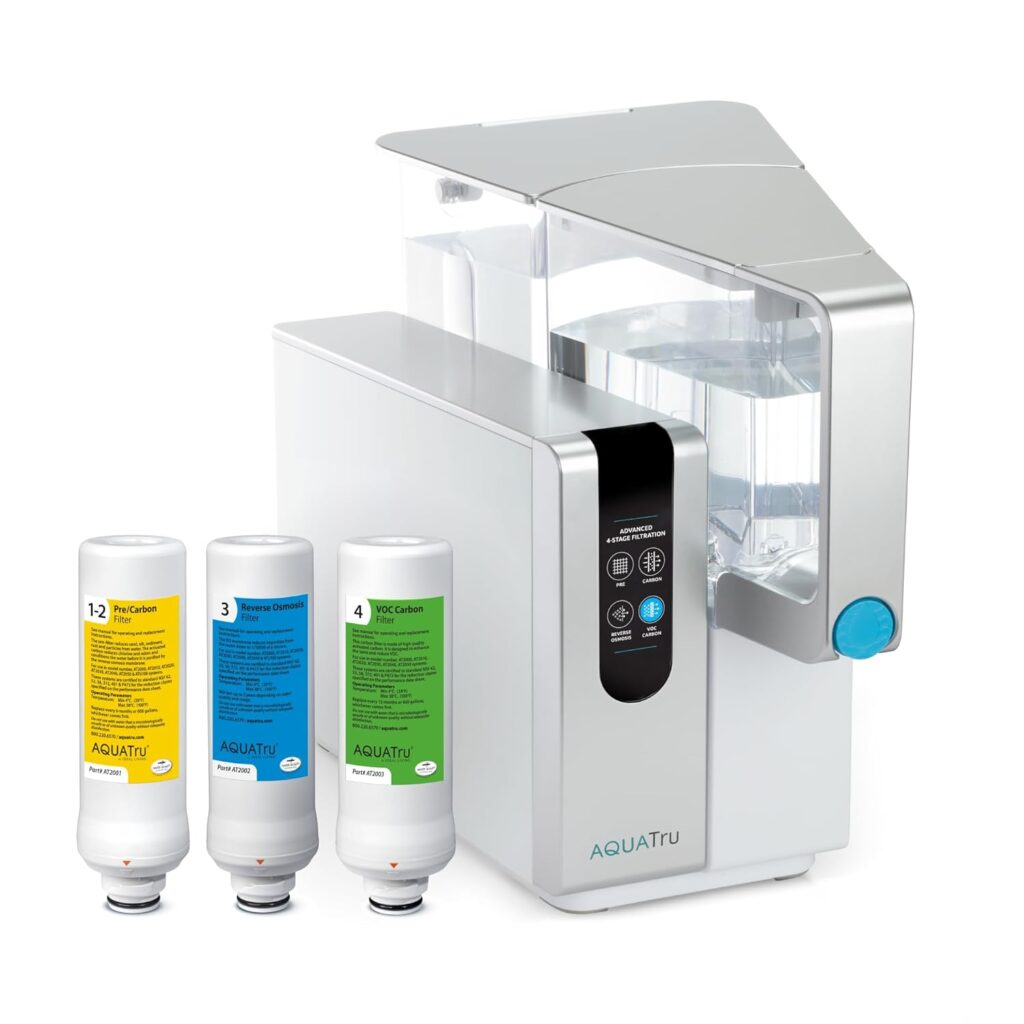
When a water test comes back flagging bacteria or PFAS near a military base or agricultural area, the search for proof usually lands on NSF certification and independent lab results. Aquatru tends to come up a lot in those situations because it’s certified by IAPMO to NSF/ANSI standards (including 53 and P473) with published performance data showing what it reduces.
The tradeoff is that it’s still RO, so it does produce reject water. Aquatru reports about 75% efficiency, which is better than many countertop RO setups, but you’re still trading some water use for broader filtration coverage.
What Hits the Mark
- Certified by IAPMO to NSF/ANSI 42, 53, 58, 401, and P473, with published test results for PFAS reduction and over 80 other contaminants, which can provide peace of mind if you’re concerned about what standard filters might miss
- Four-stage filtration includes sediment pre-filter, carbon block, RO membrane, and VOC carbon post-filter
- Countertop setup with no permanent plumbing, making it suitable for renters who plan to move
- Built-in storage tank holds filtered water so you can fill a pot or pitcher without waiting
- Filter life ranges from 6 to 24 months depending on the stage, with clear indicator lights for replacement timing
What to Know First
- RO filtration removes beneficial minerals, which can make water taste flat to some people
- The unit measures 14 inches tall, 14 inches deep, and 12 inches wide, with a 1-gallon feed tank and 3-quart clean tank, so it takes up a fair amount of counter space
- Flow rate is slower than tap water, producing about half a gallon in 10 to 15 minutes
- Initial cartridge set costs around 150 dollars, and annual replacement averages 100 to 150 dollars depending on water quality
Specs Snapshot
Filtration type: Four-stage reverse osmosis
Certifications: IAPMO certified to NSF/ANSI 42, 53, 58, 401, P473
Capacity: 1-gallon feed tank, 3-quart clean tank
Filter life: 6 months (pre-filter), 12 months (carbon), 24 months (RO membrane)
Approx annual filter cost: 100 to 150 dollars
Footprint: 14″H x 14″D x 12″W
Maintenance Notes
Filter changes are straightforward with twist-off housings. The system alerts you with lights when each stage needs replacement. Rinse the storage tank every few months to prevent any mineral buildup.
Best Countertop RO for Small Budgets: Dreo WF511 Countertop RO
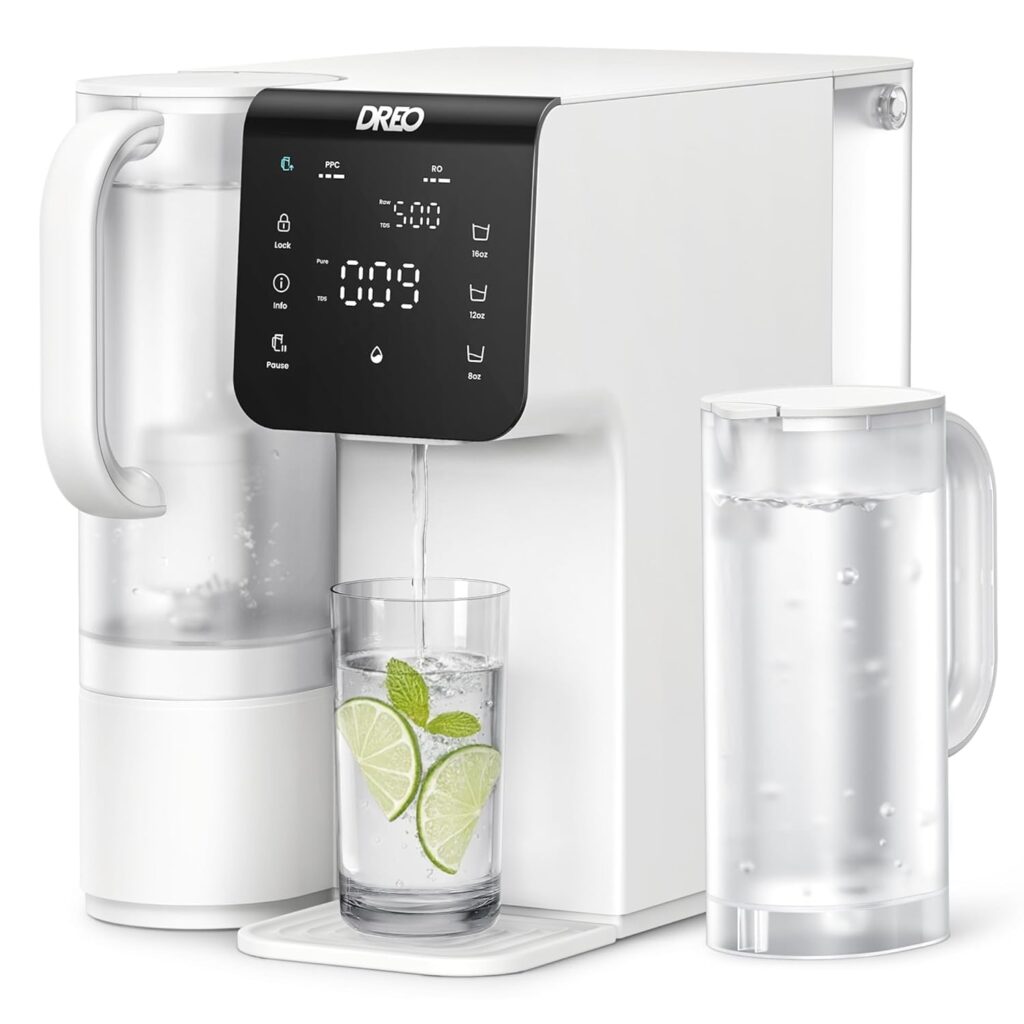
If you want affordable RO filtration, the Dreo WF511 is worth considering. It handles the basics like reducing lead, fluoride, and dissolved solids, and it’s small enough to fit on most counters without feeling like it’s taking over your kitchen.
That said, this is really meant for well water that’s already reasonably pre-treated. If you’re dealing with heavy sediment or visible cloudiness, you’ll probably need a pre-filter setup first. The unit works best when your main concern is final-stage purification rather than dealing with lots of particles upfront.
What Hits the Mark
- Seven-stage RO filtration can help with lead, fluoride, chlorine, and most dissolved solids, which covers a lot of common well water concerns
- This unit is one of the more affordable countertop RO options if you’re working with a tighter budget
- Two water pitchers included means you can keep cold filtered water in the fridge while the second pitcher auto-refills at the machine
- Real-time TDS monitor shows you water purity levels before and after filtration, which some people find reassuring
- 3:1 pure to drain ratio wastes less water than many RO systems that run 4:1 or higher
What to Know First
- You’re relying on SGS testing data rather than NSF third-party verification
- The unit is a bit larger than some compact models at about 16 inches long, so measure your counter space before ordering
- Some users mention a faint plastic taste during the first few days, though it tends to fade after running a few tanks through the system
- Like other RO units, it produces reject water, though the 3:1 ratio is better than average for countertop systems
Specs Snapshot
Filtration type: Seven-stage reverse osmosis
Certifications: SGS tested (not NSF certified)
Capacity: 5 liter reservoir with dual pitcher system
Filter life: 2000 liters (RO), 4000 liters (PPC), 6 months (PCF)
Approx annual filter cost: 80 to 120 dollars
Footprint: Approximately 15.9 x 9.1 x 13.1 inches
Maintenance Notes
Replace filters based on the TDS readings and indicator lights. The PPC filter tends to last longest, while the PCF carbon filter needs changing every 6 months. Wipe down the exterior housing and pitchers weekly to prevent any buildup.
Best Gravity Filter with NSF Certification: British Berkefeld® Gravity Water Filter
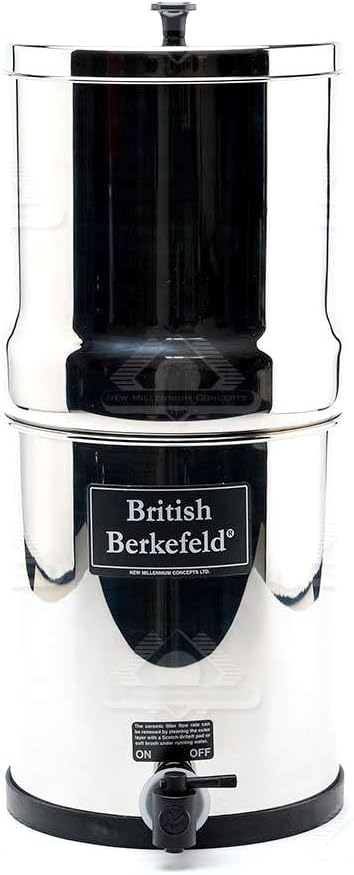
Renters who can’t drill holes and off-grid cabin owners without reliable electricity both tend to end up searching for gravity filters, but the lack of NSF certification on popular models can create some doubt. British Berkefeld addresses that gap with NSF 42, 53 and 372 ratings, covering chlorine, taste, lead, and cyst reduction with third-party verification.
That said, gravity filtration is slow. Filling the upper chamber and waiting for water to drip through the ceramic elements takes some patience, which can work fine for a couple but may frustrate families of four who need instant access throughout the day.
What Hits the Mark
- Filter elements are NSF listed for standards 42, 53 and 372
- Ceramic filter elements can last up to 12 months and can be cleaned multiple times to extend their life, which some people prefer as a more sustainable option
- Stainless steel housing holds up to 2 gallons in the lower chamber, which can provide several days of filtered water for small households
- No electricity, no plumbing, and no reject water, making it a good fit for sustainable or off-grid setups where resources are limited
- Portable design means you can move it when you relocate or even take it on road trips if needed
What to Know First
- Flow rate is pretty slow—around 1 liter per hour—so overnight pre-filling tends to become necessary for larger families or anyone who uses a lot of filtered water
- This system won’t remove fluoride or PFAS without adding extra filter elements, which increases both the upfront and ongoing costs
- The ceramic elements need scrubbing every few weeks if sediment is heavy, adding a regular maintenance step that some people find tedious
Specs Snapshot
Filtration type: Gravity-fed ceramic and carbon
Certifications: Filter elements NSF listed for standards 42, 53, 372
Capacity: 2-gallon lower chamber
Filter life: 12 months (ceramic elements)
Approx annual filter cost: 60 dollars
Footprint: 10-inch diameter, 20 inches tall
Maintenance Notes
Scrub the ceramic elements with a soft brush under running water every 2 to 4 weeks if you notice sediment buildup. Replace elements once per year or when flow rate drops noticeably.
Best for UV Plus RO Protection: SimPure UV Countertop RO
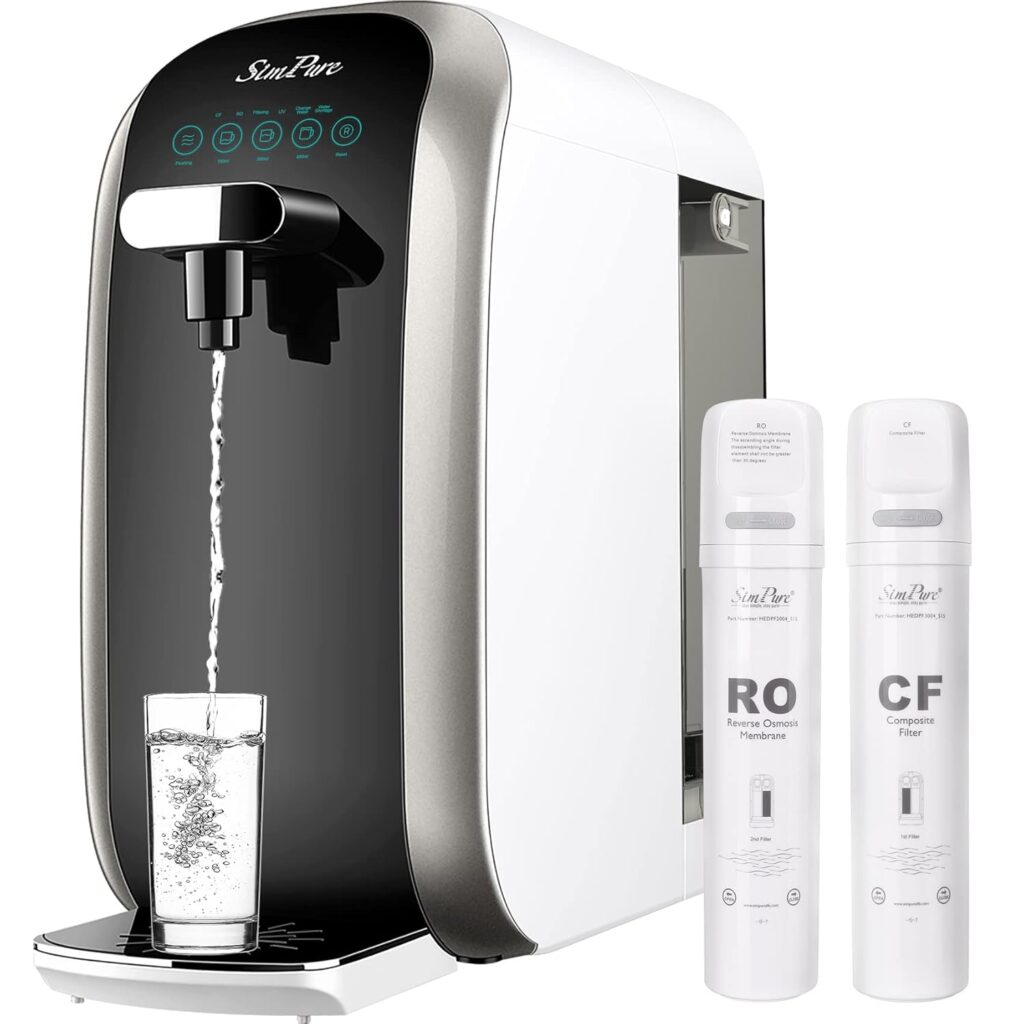
When your water test flags bacteria or you live somewhere with older well infrastructure, the question of whether standard filtration is enough can keep you up at night. The SimPure countertop water filter system addresses that concern by pairing reverse osmosis with a built-in UV light, giving you two layers of protection instead of relying on one method alone.
That said, UV sterilization adds another component that needs occasional attention, and the unit takes up a bit more counter space than simpler RO models. For families who want extra reassurance or have had bacterial contamination issues in the past, though, the dual approach can feel worth the trade-off.
What Hits the Mark
- Five-stage filtration with RO membrane plus UV sterilization can help address both dissolved contaminants and microbial concerns in one unit
- Tested by SGS to NSF/ANSI 58, which provides third-party verification for contaminant reduction performance
- No installation needed beyond plugging it in, which can be convenient for renters or anyone avoiding permanent plumbing changes
- Full filter cartridge set provides up to 528 gallons of purified water before needing replacement, which works out to roughly 6 to 12 months for most households
- UV lamp automatically activates during dispensing, so you do not need to remember to turn it on manually
What to Know First
- UV effectiveness depends on water clarity, so if your well water runs very turbid, the RO pre-filters need to catch that sediment first
- The system produces reject water at a 4 to 1 ratio, meaning you’ll waste about 4 gallons for every gallon filtered
- Flow rate of 418 gallons per day means filling a glass takes around 15 seconds, which is faster than gravity filters but slower than direct tap water
- Some users mention the unit can feel a bit bulky compared to gravity filters, especially in smaller kitchens
Specs Snapshot
Filtration type: Five-stage RO with UV sterilization
Certifications: Tested by SGS to NSF/ANSI 58
Capacity: 418 gallons per day flow rate
Filter life: Full cartridge set provides approximately 528 gallons
Approx annual filter cost: 80 to 120 dollars including UV lamp
Footprint: Approximately 18″L x 8″W x 17″H (estimate based on countertop design)
Maintenance Notes
Replace the filter cartridge set when the indicator shows it’s time, typically after 528 gallons or 6 to 12 months. Monitor the UV lamp and replace as needed. Wipe down the exterior every few weeks to keep dust from accumulating.
Best for Fast Dispensing With No RO Wastewater: Aquasana Clean Water Machine
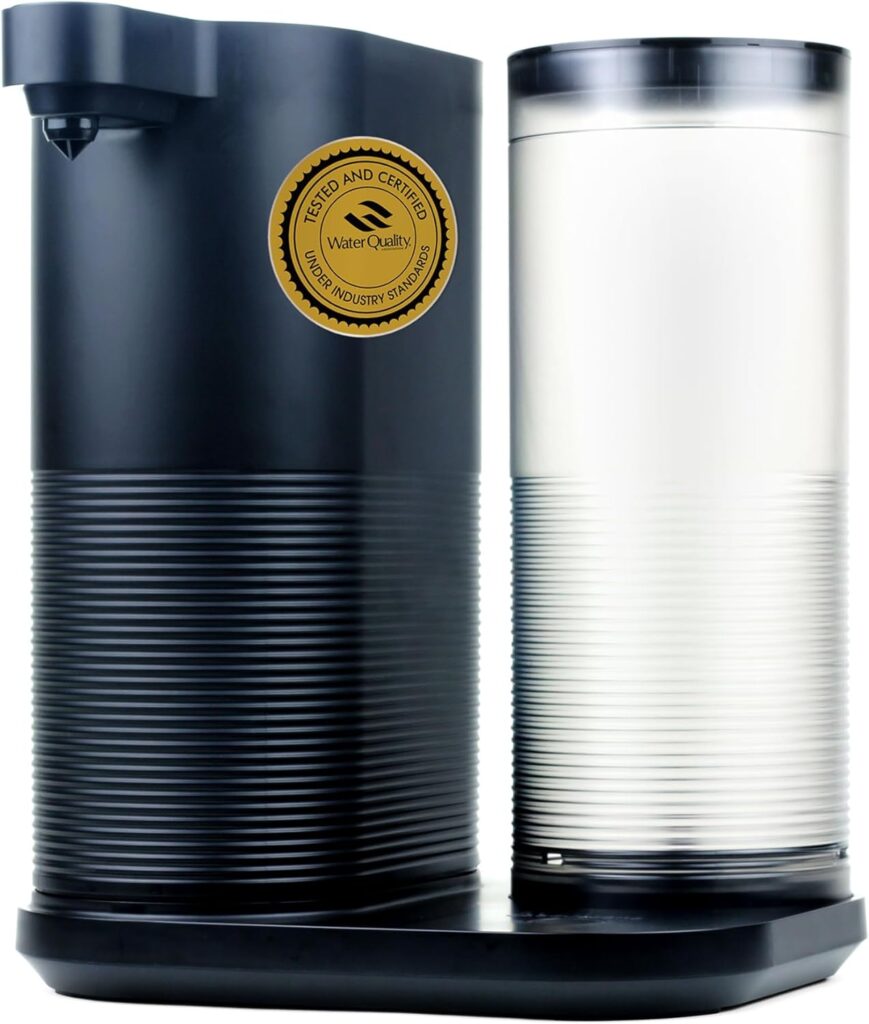
If the idea of RO’s slow production and reject water doesn’t sit right with you, but you still want thorough filtration, the Aquasana Clean Water Machine can be a nice middle ground. It uses a multi-stage process with Claryum technology combining carbon, ion exchange, and sub-micron filtration to handle a wide range of contaminants without the wastewater issue.
That said, this system won’t remove as many dissolved solids as a full RO setup. It’s designed more for improving taste and reducing specific contaminants like lead, chlorine, and microplastics, rather than stripping out everything the way RO does. For many people, that’s actually a plus because you keep beneficial minerals in your water.
What Hits the Mark
- Claryum filtration can help reduce up to 99% of 78 contaminants including lead, PFAS (specifically PFOA and PFOS), chlorine, pesticides, and microplastics without producing wastewater
- Power-activated system means you get an 8-ounce glass of filtered water in about 8 seconds, which is much faster than gravity filters or most RO units
- NSF 42, 53, and 401 certified, giving you third-party verification for contaminant reduction rather than relying solely on manufacturer claims
- The system keeps beneficial minerals like calcium and magnesium in your water, so it tends to taste more natural than fully demineralized RO water
- Filter lasts up to 6 months or 300 gallons, which is about 7.5 times longer than leading pitcher filters
What to Know First
- This isn’t an RO system, so it will not reduce Total Dissolved Solids (TDS) or remove fluoride and nitrates as effectively as RO filtration
- The countertop unit takes up some counter space at about 12 inches tall and 10 inches wide, so measure your area before ordering
- Replacement filters run about 70 dollars each, working out to roughly 140 dollars per year if you replace them every 6 months
- Some users mention the system can be a bit noisy while filtering, though the noise stops once the tank fills
Specs Snapshot
Filtration type: Power-activated Claryum (carbon, ion exchange, sub-micron)
Certifications: NSF 42, 53, 401; 100% BPA-free
Capacity: 300 gallons per filter or up to 6 months
Filter life: 6 months or 300 gallons
Approx annual filter cost: 140 dollars (two filter replacements)
Footprint: Approximately 10 x 10 x 11.5 inches
Maintenance Notes
Replace the filter cartridge every 6 months or 300 gallons, whichever comes first. The system has indicator lights to remind you when it’s time. Clean the exterior housing regularly and wipe down the dispensing area to prevent any buildup.
Best for Tiny Kitchens and Quick Setup: Brondell H630 Cypress Countertop System
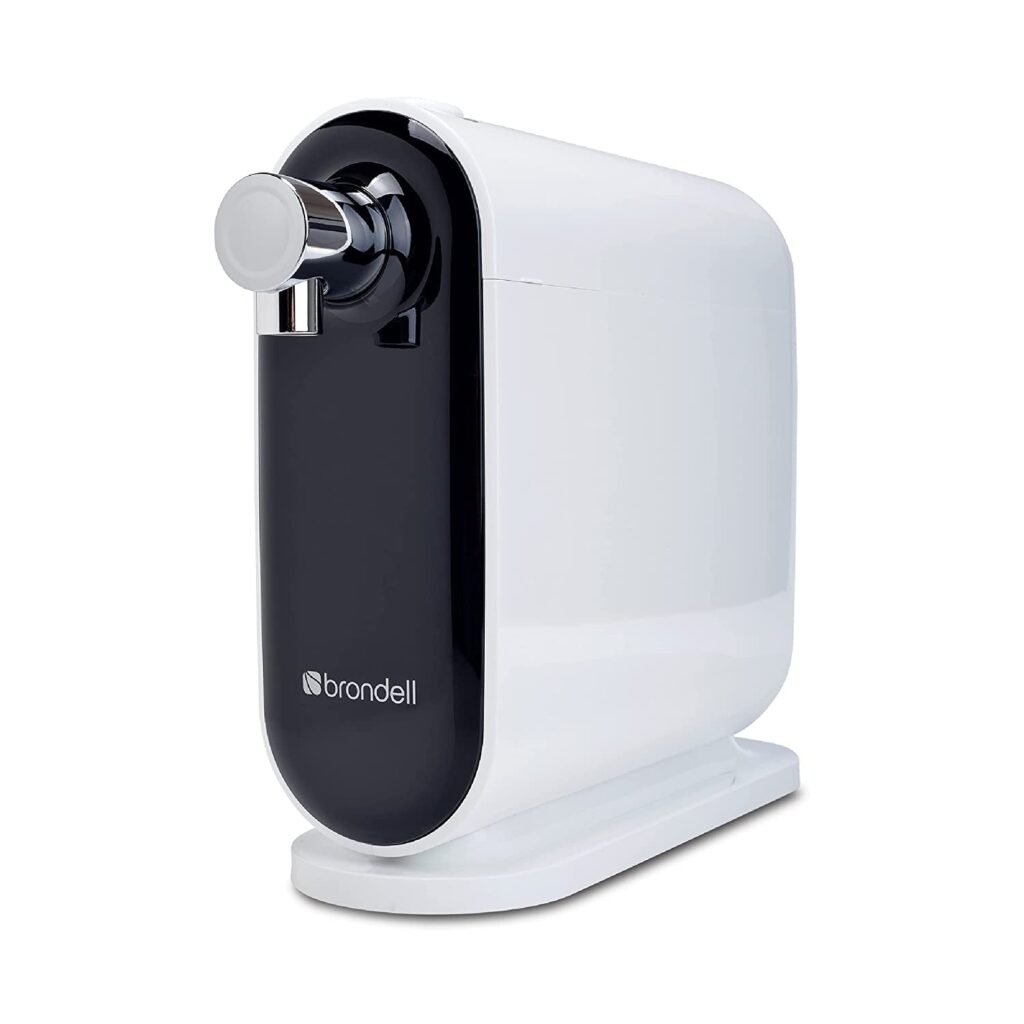
When counter space is at a premium and you want something that doesn’t require a big footprint, the Brondell H630 Cypress can be a good fit. It sits right next to your sink and connects directly to the faucet with a diverter valve, so you’re not sacrificing valuable workspace for a large tank or storage unit.
One thing to keep in mind is that this is a carbon-based filtration system, not RO. It handles taste, odor, chlorine, and some dissolved contaminants pretty well, but it won’t tackle everything an RO system can. For people who mainly want better-tasting water without major space commitment, this unit may be better suited.
What Hits the Mark
- Compact vertical design at just 3.75 inches wide takes up minimal counter space compared to larger RO units with storage tanks
- Three-stage filtration combines Composite Plus, patented Nanotrap, and Carbon Block filters to reduce particulates, viruses, bacteria, chlorine, VOCs, lead, and contaminants according to Brondell’s performance sheet
- Holds WQA Gold Seal certification and is certified under NSF/ANSI standards 42, 53, and 372 for trustworthy third-party verification
- Connects to your faucet with a diverter valve, making installation quick and straightforward without needing a plumber or drilling
- Flow rate of 0.5 gpm is faster than RO systems since it’s not running water through a membrane, so filling pots and pitchers feels more natural
What to Know First
- This isn’t an RO system, so it won’t remove fluoride, nitrates, or all PFAS compounds as effectively as RO filtration, which is a consideration if those are your main concerns
- Doesn’t work with pull-out or adjustable spray faucets, so check your faucet type before ordering
- Filter replacement schedule varies by stage—Composite Plus and Carbon Block need changing every 6 months, while Nanotrap lasts 12 months
Specs Snapshot
Filtration type: Three-stage (Composite Plus, Nanotrap, Carbon Block)
Certifications: NSF 42, 53, 372; WQA Gold Seal
Capacity: Continuous flow at 0.5 gpm, no storage tank
Filter life: Composite Plus 6 months, Nanotrap 12 months, Carbon Block 6 months
Approx annual filter cost: 80 to 100 dollars
Footprint: 11.5 x 4.25 x 11 inches
Maintenance Notes
Replace Composite Plus and Carbon Block filters every 6 months, Nanotrap filter annually. Clean the diverter valve connection every few weeks to prevent mineral buildup. Check for leaks around the connection point occasionally, especially after filter changes.
Best for Taste Upgrades With RO Coverage: Bluevua Lite UV with Remineralization
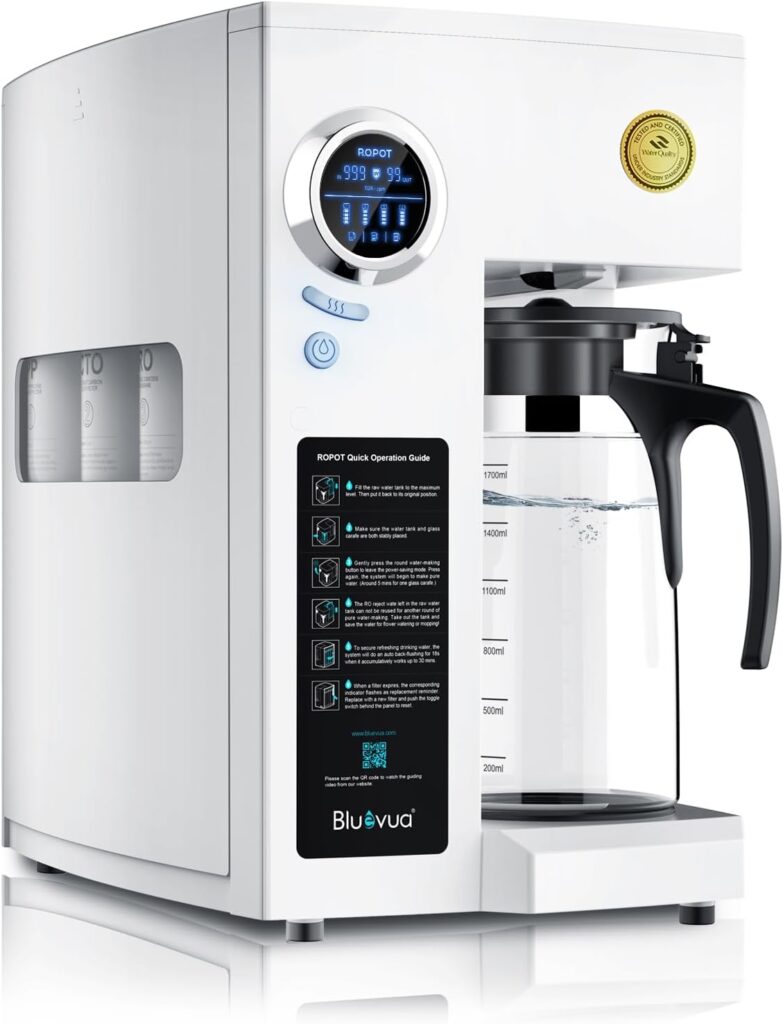
Some people switch to RO filtration and immediately notice the water tastes flat or empty, which can make the whole system feel less satisfying even when you know it’s removing contaminants. The Bluevua Lite addresses that by adding a remineralization stage that puts calcium and magnesium back into the water, along with a UV light for an extra layer of protection.
One trade-off is that taste preferences are pretty personal. Some people love the mineral flavor, while others barely notice the difference.
What Hits the Mark
- Six-stage filtration with 0.0001μm RO membrane, UV sterilization, and remineralization can help cover both thorough contaminant removal and taste improvement in one portable unit
- Borosilicate glass carafe instead of plastic reduces the risk of any secondary contamination and feels more premium than typical countertop systems
- WQA certified against NSF/ANSI/CAN 372 for lead-free materials, and SGS tested for contaminant reduction performance
- The 2 to 1 pure-to-drain ratio saves more water than most countertop RO systems, which typically run 3 to 1 or 4 to 1
What to Know First
- The remineralization filter adds extra to your filter costs, on top of the standard RO cartridge replacements
- Some people feel the remineralized water still tastes different from their original well water, so it may not fully recreate the specific mineral flavor you’re used to
Specs Snapshot
Filtration type: Six-stage RO with UV and remineralization
Certifications: WQA certified against NSF/ANSI/CAN 372, SGS tested
Capacity: 1.7 liters total (glass carafe holds filtered water)
Filter life: 12 to 24 months depending on usage and water quality
Approx annual filter cost: 90 to 150 dollars including remineralization filter
Footprint: 10.9″L x 15.4″W x 14.3″H
Maintenance Notes
Replace filters based on the built-in monitor system. Clean the glass carafe and water tank every couple of weeks to prevent any buildup.
Well Water Testing Basics Before Buying a Filter
Testing your well water before choosing a filter prevents wasting money on systems that do not match your actual contaminants. A basic test costs around 30 to 50 dollars and covers common issues, while comprehensive lab analysis runs about 200 to 300 dollars but reveals bacteria, PFAS, and other hidden problems.
What to Test for Based on Your Situation
New homeowners should test for bacteria, nitrates, pH, hardness, iron, and manganese at minimum. If you live near agriculture, add pesticides and nitrates to the list. Near military bases or airports, test for PFAS. Near old homes or industrial areas, include lead and arsenic.
Most hardware stores sell basic kits that give rough estimates, but lab services like TapScore, SimpleLabs, or your local health department provide detailed reports with exact contaminant levels. Those numbers help you match the filter to your needs.
How Often to Retest Your Well
Annual testing is standard for wells, with more frequent checks if you notice changes in taste, odor, or color. After heavy rain or flooding, retest for bacteria since surface water can seep into shallow wells.
If you install a new filter, test again after a few months to confirm the system is working as expected. Some users discover their cartridges are clogging faster than predicted, signaling a need for pre-filtration.
Using Test Results to Choose the Right Filter
Once you have test results, compare them to what each filter type removes:
- Bacteria, viruses, cysts: RO systems or UV treatment upstream
- PFAS, lead, arsenic: RO systems with NSF 53 certification or third-party PFAS testing
- Iron, manganese, sulfur: Whole-house treatment first, then countertop carbon or RO for drinking water polish
- Sediment, turbidity: Pre-filter stacking, then any countertop system
- Taste, odor, chlorine: Carbon filters, gravity systems, or faucet-mounted options
If your test shows multiple issues, you may need both whole-house treatment and a countertop system to cover everything.
How to Choose a Countertop Water Filter for Well Water
Picking the right countertop filter depends on what your water test shows, how much counter space you have, and whether you own the property or rent. A new homeowner dealing with coliform has different needs than a renter trying to improve taste on a tight budget.
Start with a Water Test Before Buying Anything
Most well water problems become obvious through staining, smell, or cloudiness, but bacteria and dissolved contaminants like PFAS or lead stay hidden until you test. A basic test kit from a hardware store checks for common issues like iron and pH, while lab services such as TapScore or SimpleLabs provide detailed reports on bacteria, nitrates, arsenic, and PFAS.
Once you know what is in your water, you can match the filter to the contaminants. Gravity filters and carbon systems handle taste, odor, and sediment well. RO systems remove bacteria, lead, PFAS, and most dissolved solids. Faucet-mounted filters work for light chlorine and taste issues but miss serious contaminants.
Testing also reveals when a countertop filter is not enough. Heavy iron, sulfur smell, or hardness usually need whole-house treatment upstream, with the countertop unit acting as a final polish for drinking water.
Compare RO Systems vs Gravity Filters for Your Situation
| Option | Best for | Tradeoffs |
|---|---|---|
| Countertop RO | Bacteria, PFAS, lead, and dissolved solids removal with faster flow than gravity | Produces reject water, needs electricity, removes beneficial minerals |
| Gravity filter | Renters, off-grid setups, and anyone avoiding plumbing changes or electricity | Slow flow rate, limited PFAS removal without add-ons, requires overnight pre-filling |
| Faucet-mounted | Short-term rentals, tight budgets, and light taste improvement | Does not remove bacteria, viruses, or PFAS, limited to carbon filtration |
RO systems cost more upfront and waste water, but they handle serious contaminants that gravity filters cannot touch. Gravity filters avoid reject water and work without power, making them better for sustainable living or emergency backup. Faucet filters trade performance for convenience, working best when your water test comes back clean except for taste.
Factor in Sediment Load and Pre-Filter Needs
Wells with high turbidity or visible cloudiness clog standard filters in days instead of months. If you replace cartridges more than once every six weeks, a spin-down pre-filter is worth the small investment. The 500-micron stage catches sand and rust before they reach the finer filtration, extending the life of your main filters by three to five times.
Pre-filter installation requires basic plumbing and access to your water line, so renters may find it impractical. Homeowners dealing with appliance damage from sediment, though, save money long-term by protecting dishwashers, ice makers, and washing machines.
Consider NSF Certification vs Manufacturer Claims
NSF certification provides third-party proof that a filter removes what it claims. NSF 42 covers taste and odor. NSF 53 includes lead, cysts, and some PFAS compounds. NSF 372 ensures lead-free materials in the filter housing itself.
Aquatru and British Berkefeld hold NSF certifications, giving you confidence backed by independent testing. Some budget RO systems rely on manufacturer testing, which can be accurate but lacks the verification that skeptical buyers prefer.
If your water test shows bacteria, lead, or PFAS, prioritize NSF 53 certification or at minimum look for independent lab reports from TapScore or similar services. For taste and sediment improvement, manufacturer claims are usually sufficient.
Understand Flow Rate and Daily Water Needs
Gravity filters produce around 1 liter per hour, which works fine for one or two people who plan ahead. Families of four need faster access, making countertop RO systems with 10 to 15 minute fill times more practical.
If you cook with filtered water, fill pet bowls, or make coffee throughout the day, slow gravity filtration becomes a friction point. Users either pre-fill containers overnight or upgrade to RO systems despite the higher cost.
Faucet-mounted filters sit in the middle, offering instant access but with reduced flow compared to unfiltered tap water. For quick glasses of drinking water, they work well. For filling stockpots or large pitchers, the slower flow gets frustrating.
Account for Total Cost of Ownership Over Three to Five Years
Upfront price matters, but filter replacement costs can also add up.
Gravity filters typically cost less overall—around 550 dollars across five years when you include the initial purchase plus annual cartridge replacements. This better suits someone who doesn’t mind planning ahead and filling the upper chamber overnight.
RO systems run higher in total cost, usually landing somewhere between 750 and 1,250 dollars over the same period depending on which model you choose. That extra expense buys you faster flow, broader contaminant removal, and the convenience of not waiting around for water to drip through.
Some people find that trade-off worthwhile, especially when they’re dealing with bacteria, PFAS, or lead concerns that gravity filters can’t fully address.
A basic breakdown:
| System Type | Initial Cost | Annual Filter Cost | 5-Year Total |
|---|---|---|---|
| Gravity filter | ~250 dollars | ~60 dollars | ~550 dollars |
| Budget countertop RO | ~350 dollars | ~80 dollars | ~750 dollars |
| Premium countertop RO | ~500 dollars | ~150 dollars | ~1250 dollars |
| Faucet-mounted | ~50 dollars | ~100 dollars | ~550 dollars |
These estimates assume average filter life and no pre-filter needs. Heavy sediment wells or frequent cartridge changes push costs higher across all categories.
Check Space and Portability Requirements for Renters
Renters need no-plumbing setups and easy removal when moving. Gravity filters and countertop RO units meet that need, while under-sink systems require landlord approval and permanent installation.
Faucet-mounted filters offer the cleanest removal, leaving zero trace when you relocate. Countertop RO systems are portable but take up space, which is something to consider when you have a small kitchen. Measure your counter before ordering to avoid discovering the unit does not fit.
If you move frequently, look for models with quick-disconnect hoses and compact designs that fit in a moving box without damage.
When Whole-House Filtration Is the Real Fix
Countertop filters work well for drinking and cooking water, but they cannot solve problems that affect your entire plumbing system. Heavy iron, sulfur smell, and hard water scale damage appliances and create staining that a countertop unit never touches.
Iron and Rust Staining Needs Upstream Treatment
Orange or brown stains on sinks, toilets, and laundry indicate iron levels above 0.3 parts per million. Countertop filters reduce some iron, but the volume needed to protect dishwashers and washing machines requires a whole-house iron filter or water softener.
Most well owners with visible staining install a sediment pre-filter, then an iron removal system, and finally use a countertop RO or gravity filter for drinking water. The countertop unit polishes taste and removes any remaining dissolved iron, but it is not the primary solution.
Sulfur Smell Requires Carbon or Aeration
Hydrogen sulfide creates the rotten egg smell that makes showering unpleasant and ruins the taste of hot beverages. Activated carbon in countertop filters can reduce sulfur for drinking water, but the smell in showers and washing machines requires whole-house carbon filtration or an aeration system.
Some well owners shock chlorinate their well to kill sulfur-producing bacteria, then add a countertop filter for ongoing taste improvement. Others install whole-house carbon tanks that treat every tap.
Hardness and Scale Build-Up Need a Softener
White spots on dishes, clogged showerheads, and reduced appliance lifespan all point to hard water with high calcium and magnesium. RO systems remove hardness for drinking water, but protecting your entire home requires a water softener installed at the main line.
Countertop filters can polish softened water for taste or remove any lingering dissolved solids, but they cannot replace a softener for whole-house scale prevention.
Conclusion
Choosing the best countertop water filter for well water really starts with a test, not a guess.
If your results point to higher concern contaminants like PFAS, nitrates, lead, or bacteria, a countertop RO system can be the most reliable option for drinking and cooking water. The Aquatru tends to be a good choice if you want NSF certification and lab-verified PFAS removal, while the Dreo WF511 can work well if you’re on a tighter budget and your water is already reasonably pre-treated.
If the problem is mostly taste, odor, or light sediment, a gravity system like British Berkefeld can work as a simpler backup, though it will be slower. For people who want filtration without RO’s wastewater, the Aquasana Clean Water Machine can be a nice middle ground.
For heavy sediment, iron staining, or sulfur odor, it usually works better to treat those issues at the source first with the right pre-treatment, then use a countertop filter for drinking water as a final step.
Start with a water test, then choose the simplest system that targets what shows up in your results.
FAQs
What type of water filter is best for well water?
The best water filter for well water depends on what is in your well, not the filter brand. Start with a lab test, then match treatment to the result. Sediment and iron usually need whole house pre treatment, while a countertop or under sink RO system is best when PFAS, nitrates, lead, or bacteria are concerns.
What is the highest rated countertop water filtration system?
There is no single highest rated countertop water filtration system for every home because the right pick depends on your contaminants, budget, and how much water you need each day. Look for models with third party test data for the specific contaminants you want reduced, plus reasonable replacement filter costs and a tank size that fits your situation.
Do countertop water filters really work?
Yes, countertop water filters work when the filter type matches the problem you are trying to solve. Carbon systems can improve taste and reduce chlorine and some chemicals, while countertop RO systems cover a wider range like PFAS, nitrates, and lead. They will not fix whole house issues like iron staining or sulfur odor at every tap.
Should I put a filter on my well water?
You should put a filter on well water if testing shows contaminants, or if you have clear issues like sediment, staining, or odor. Many homes use a whole house sediment filter first to protect plumbing and appliances, then add a point of use filter in the kitchen for drinking water. The best setup depends on the test results and your water usage.
Which water purifier is best for well water?
The best water purifier for well water is the one designed for the contaminants found in your well test. For bacteria concerns, disinfection such as UV or RO is often used, while sediment and iron usually need dedicated whole house treatment. If the goal is safer drinking water only, a point of use RO system is often the simplest upgrade.
Do I really need a reverse osmosis system with well water?
You do not always need a reverse osmosis system with well water. RO is most useful when your test shows contaminants like PFAS, nitrates, arsenic, or lead, or when you want broader reduction coverage. If your main issue is sediment, staining, or sulfur odor, whole house treatment often makes a bigger difference than RO alone.
How can I make sure my well water is safe to drink?
To make sure well water is safe to drink, test it regularly and treat based on the results. At minimum, test for bacteria, nitrates, and common metals, and retest after flooding or plumbing work. If bacteria is detected, address it with proper disinfection and confirm with a follow up test before relying on a drinking water filter.
This article is for general informational purposes only and does not constitute professional water-treatment advice. Water quality varies widely by well, so consider testing your water and consulting a qualified professional for guidance. As an Amazon Associate I earn from qualifying purchases at no extra cost to you.