Plenty of people buy a pitcher filter to handle that swimming pool taste and smell from their tap, then discover it does almost nothing for fluoride.
Most standard activated carbon filters handle chlorine reasonably well but let fluoride ions pass right through.
That gap tends to push people toward reverse osmosis systems, specialty pitchers with anion exchange resin or bone char media, or gravity-fed setups that use more targeted filtration technology.
This list covers six options across those categories, including countertop RO systems that need no plumbing, tankless under-sink setups, and pitcher filters that have actual fluoride test data behind them.
The picks below vary in a few important ways, including how much filtered water they can produce per day, whether they need installation, and how they approach fluoride reduction.
When a system has IAPMO or WQA certification to NSF/ANSI 58, NSF 42, or NSF 53, we call that out. Those certifications are one of the most reliable ways to confirm a filter performs as advertised, instead of relying on marketing claims alone.
Top Picks
Best Overall
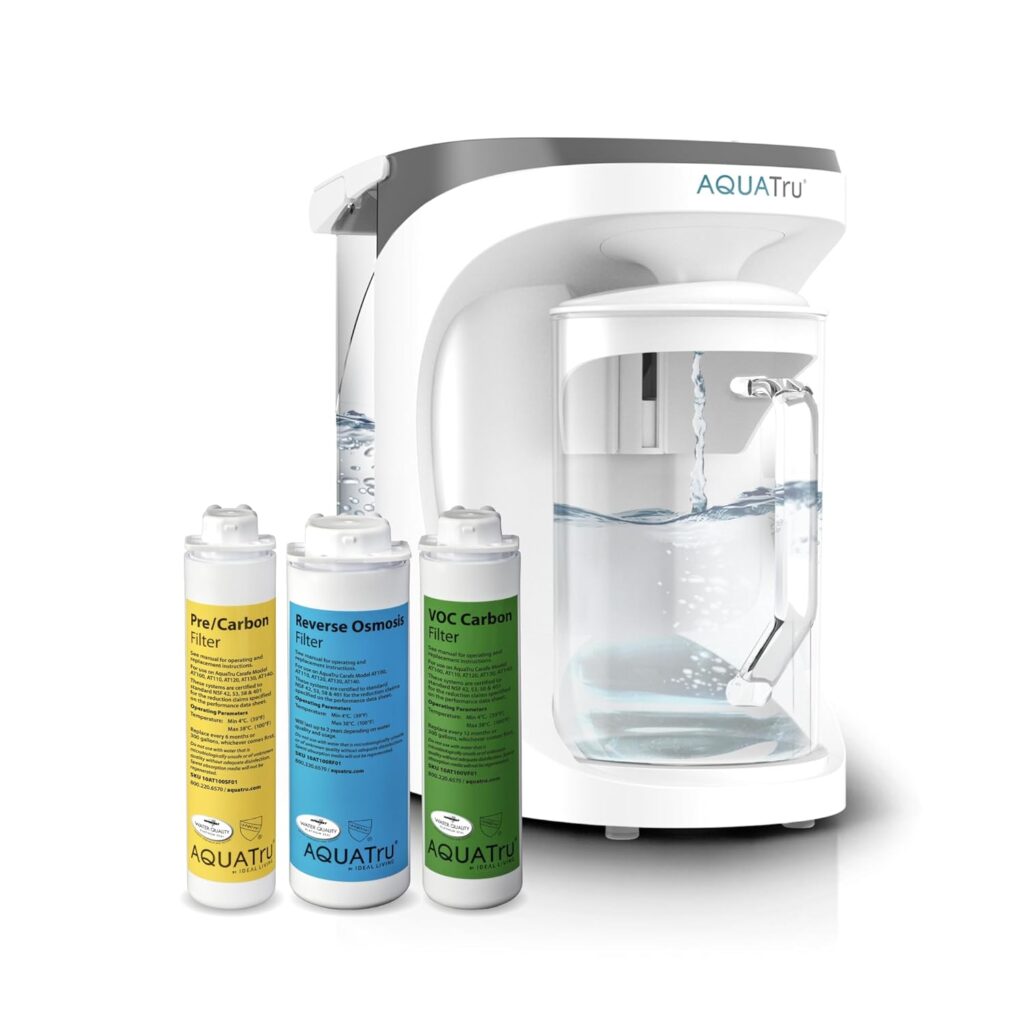
AquaTru Countertop Reverse Osmosis System
System IAPMO certified to NSF/ANSI 42, 53, and 58 for fluoride and chlorine removal.
No installation required.
Check price on Amazon
Jump to review ↓
Best Under-Sink RO
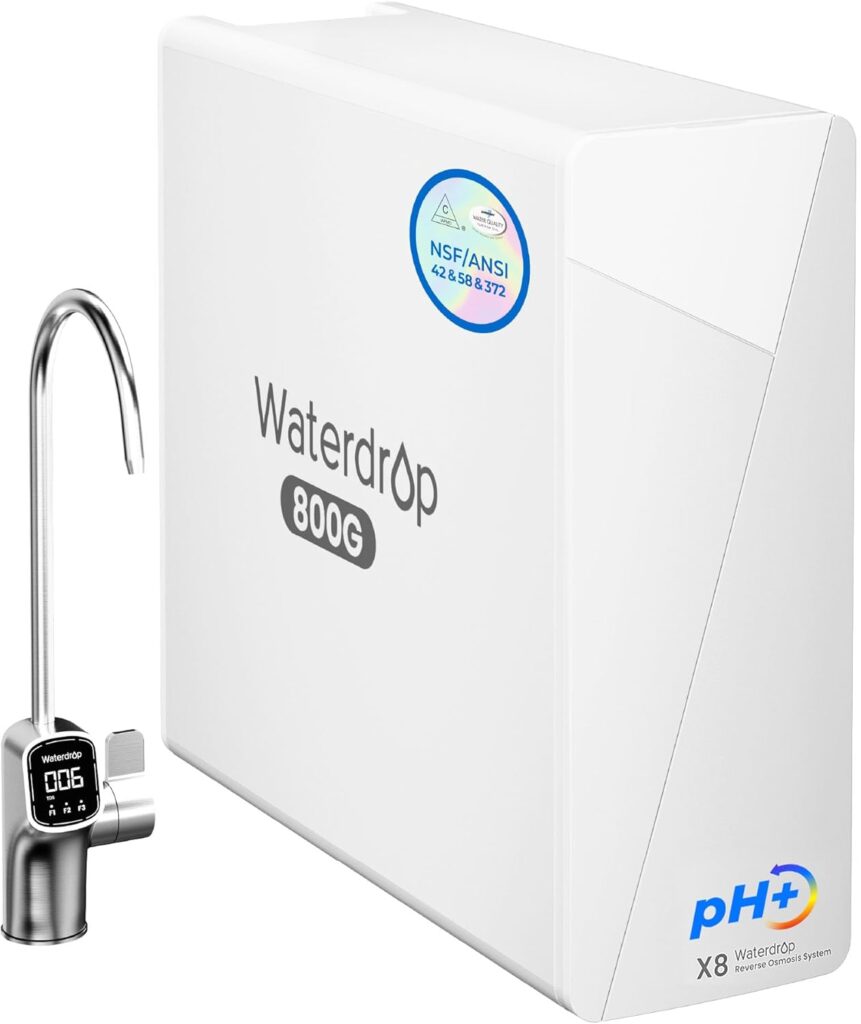
Waterdrop G3 P800 Tankless RO
IAPMO certified to NSF/ANSI 42, 53, and 58
Best for households that use a lot of filtered water daily and want it out of sight.
Check price on Amazon
Jump to review ↓
Best Under-Sink RO with Remineralization
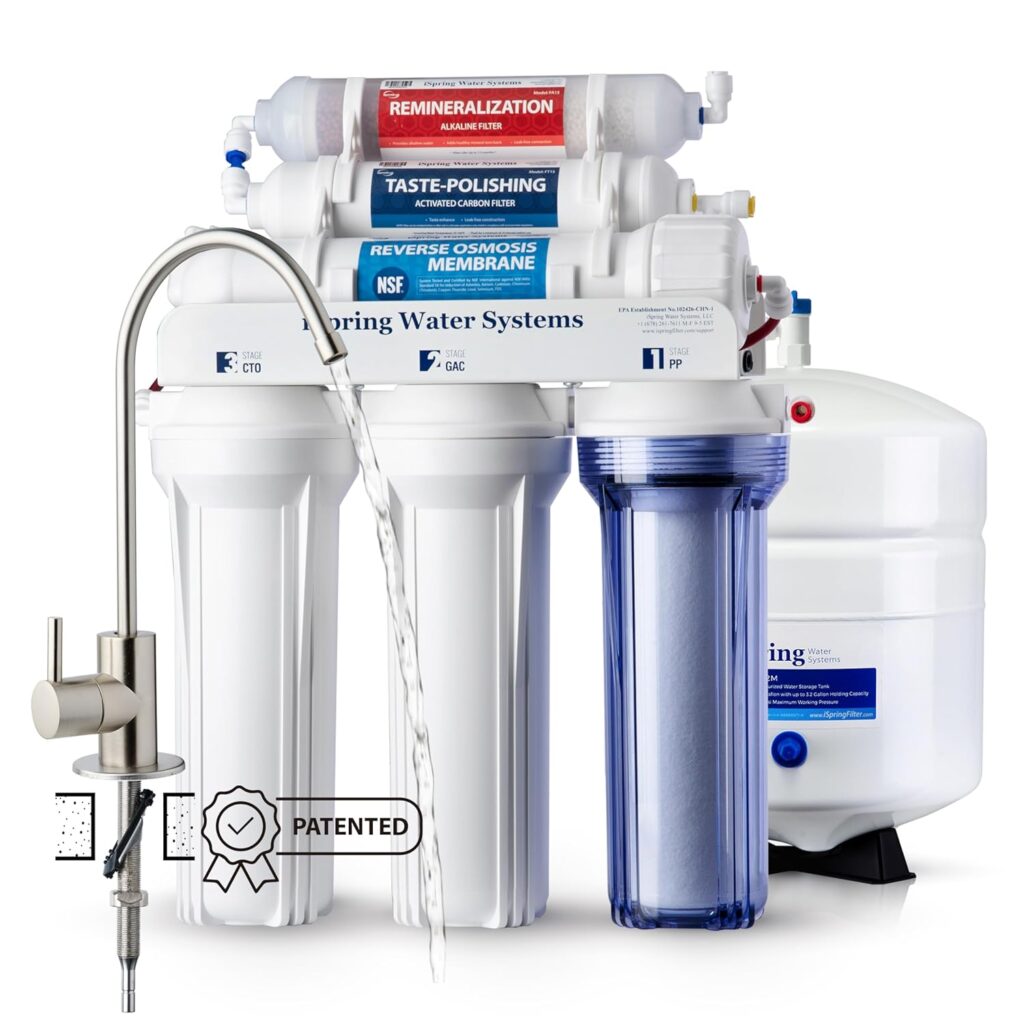
iSpring RCC7AK Six-Stage RO
International certified to NSF/ANSI 58 with verified fluoride reduction of 97.4% and chlorine reduction of 95 to 99%
Best for families who want RO purity with minerals added back for a better-tasting result
Check price on Amazon
Jump to review ↓
Best Budget Under-Sink RO
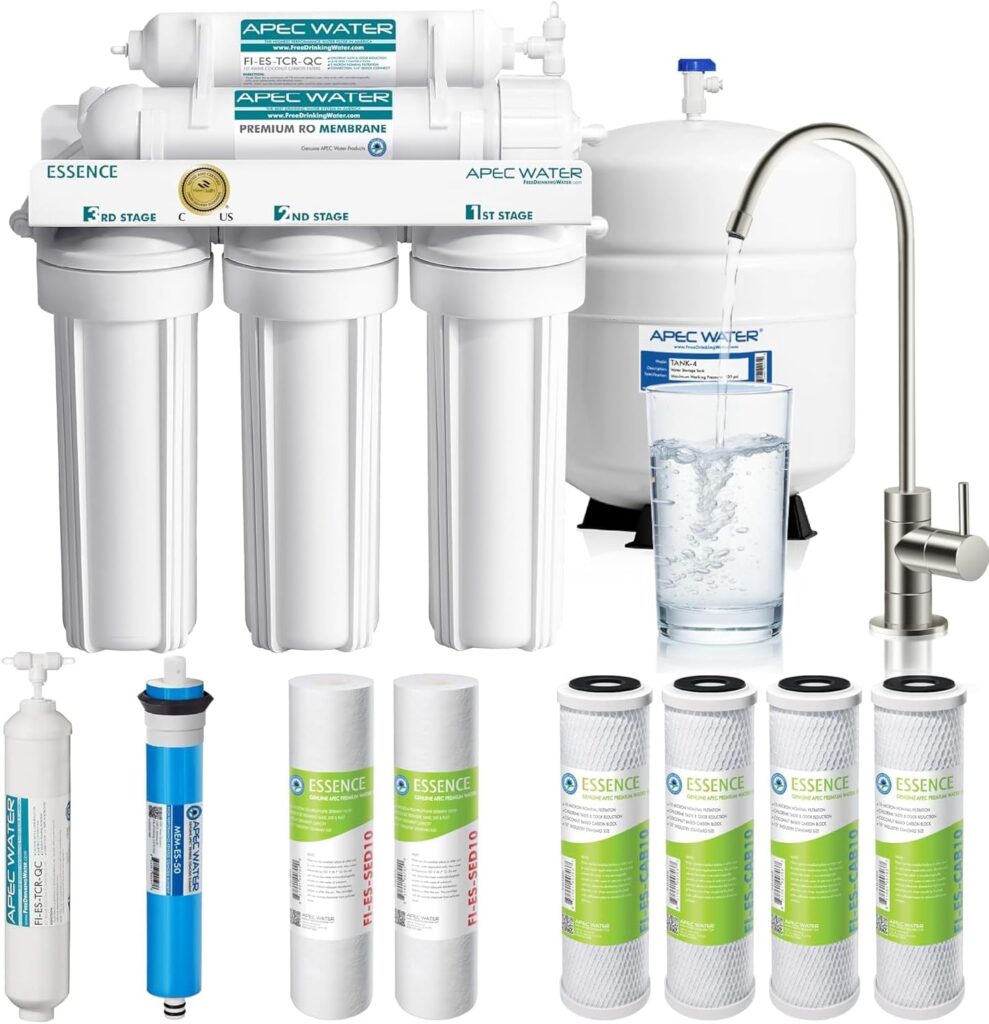
APEC ROES-50 Five-Stage RO
WQA Gold Seal certified for TDS reduction and system integrity; manufacturer testing indicates up to 99% reduction of chlorine, fluoride, lead, arsenic, and other contaminants.
Best for reliable under-sink RO performance at a lower entry price.
Check price on Amazon
Jump to review ↓
Best Pitcher for Fluoride
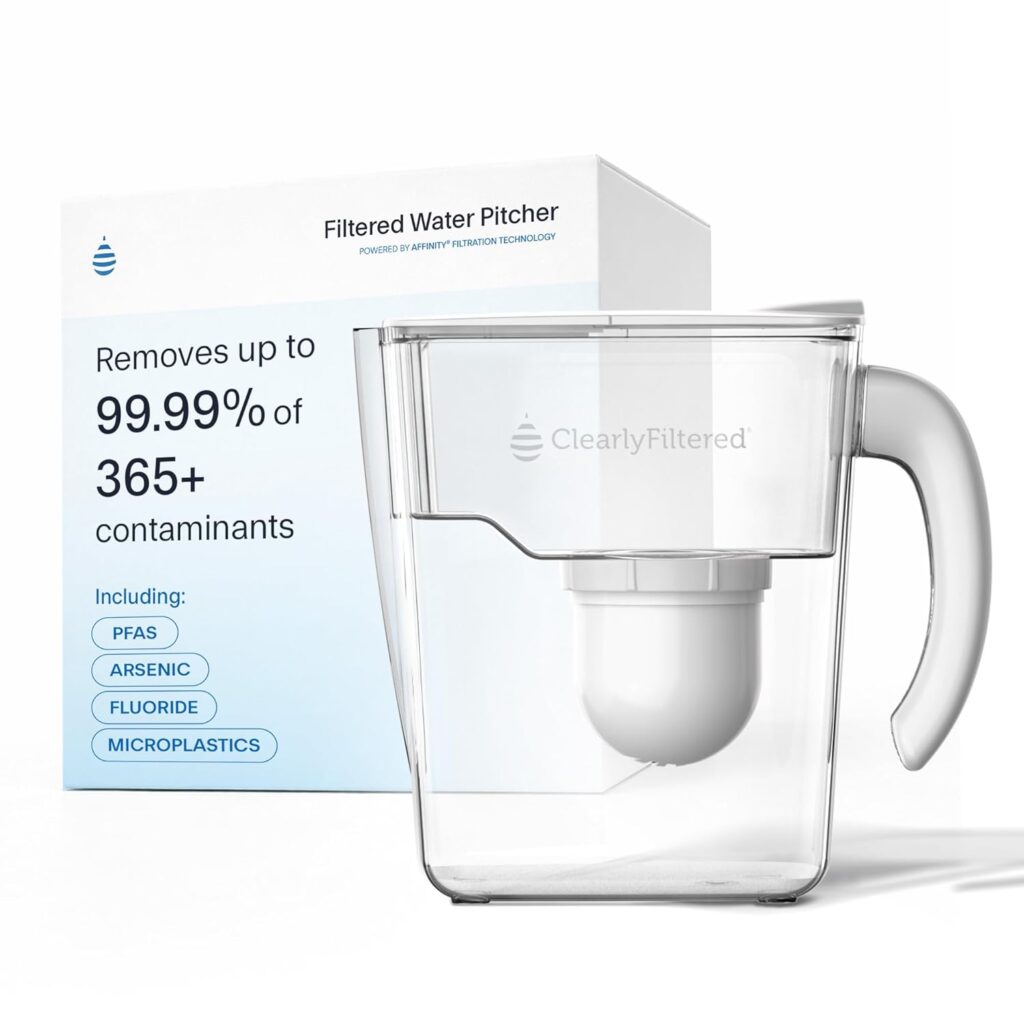
Clearly Filtered Water Pitcher
Third-party tested by an IAPMO-accredited lab showing > 99.54% fluoride reduction.
Best for renters or apartment dwellers who want fluoride reduction without installation.
Check price on Amazon
Jump to review ↓
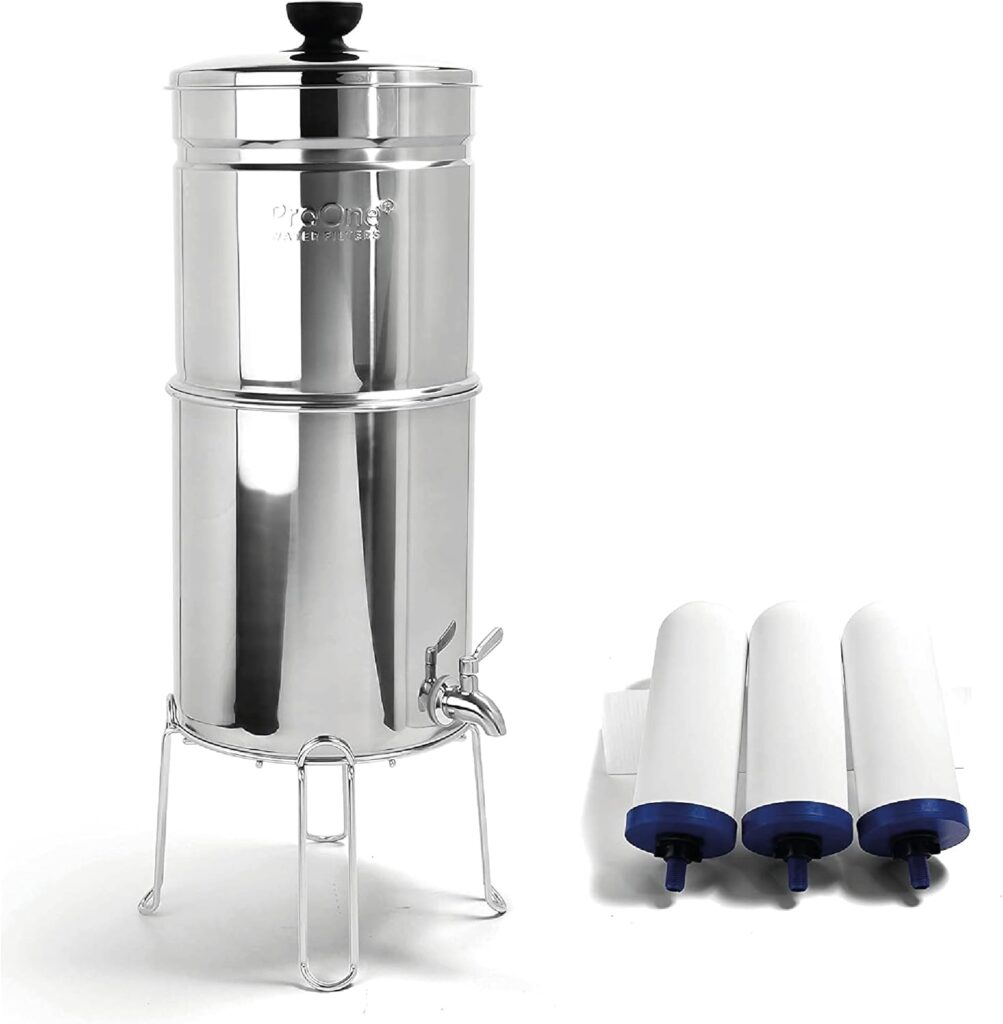
Best Gravity Filter
ProOne Big+ Gravity Filter
IAPMO‑certified as components to NSF/ANSI 42 and 372 and independently tested against NSF/ANSI 53 and 401 protocols for lead, total PFAS, and microplastics.
Best for off-grid use, emergency prep, or anyone who wants zero plumbing and zero electricity
Check price on Amazon
Jump to review ↓
Our Top Picks
1. Best Overall: AquaTru Countertop Reverse Osmosis System
Fluoride and chlorine removal: The AquaTru Classic has been independently tested and certified by IAPMO to NSF/ANSI Standards 42, 53, 58, and 401, covering chlorine reduction, health contaminants including fluoride and lead, RO system performance, and emerging contaminants. The manufacturer’s certified performance data sheet confirms fluoride reduction of 93.5%. (View IAPMO certification and performance data at aquatruwater.com). In independent Tap Score testing conducted by Water Filter Guru, the system eliminated 100% of fluoride and 100% of chlorine from their water sample, along with uranium, nitrate, molybdenum, and barium. (View that lab test review)
The AquaTru is our top pick because it’s a true countertop reverse osmosis (RO) system that’s IAPMO-certified to NSF/ANSI 58, and it doesn’t require any plumbing.
It sits on the counter and plugs in no faucet hookup or under-sink installation needed. Just fill the top reservoir and the system runs water through a four-stage filtration process, including a semi-permeable RO membrane built to reduce a wide range of dissolved contaminants.
It’s designed to reduce:
- Fluoride
- Chlorine
- Nitrates
- Arsenic
- Lead
- Other dissolved solids that standard carbon filters often miss
If you want RO-level filtration but don’t want to deal with installation, the AquaTru is a straightforward, low-hassle option.
What Hits the Mark
- IAPMO certified to NSF/ANSI 42, 53, 58, and 401 for 84 claimed contaminants (one of the broadest certification footprints of any countertop system)
- 4-stage process includes a sediment prefilter, the RO membrane, a coconut shell carbon postfilter for VOCs and PFAS, and an optional remineralization stage that adds calcium and magnesium back for a better-tasting result
- 4:1 recovery rate is more efficient than most RO systems, which typically run at worse ratios
- No drilling or plumbing changes required, works anywhere with a standard 120V outlet
- Built-in filter life indicator tracks gallons and alerts when replacement is due
What to Know First
- Filters at roughly 11 cups per 16 minutes; better for dedicated drinking water use than high-volume households
- Produces wastewater per cycle; the 4:1 recovery rate is good for RO, but water waste is still a factor
Maintenance notes:
- Prefilter and carbon stage replacement at 6 months.
- RO membrane replacement at 24 months.
- No backwashing or regeneration.
- The filter alert system handles reminders automatically.
2. Best Under-Sink RO: Waterdrop G3 P800 Tankless RO
Fluoride and chlorine removal: The G3 P800 has been certified by IAPMO R&T to NSF/ANSI Standards 42, 53, 58, and 372, specifically covering chlorine reduction, TDS, fluoride, cadmium, hexavalent chromium, and selenium reduction, plus lead-free construction. (View certification at waterdropfilter.com) In independent Tap Score testing conducted by Water Filter Guru, the G3 P800 eliminated 100% of fluoride, chlorine, arsenic, copper, lead, manganese, and selenium from their water sample, with 9 of 12 detected health contaminants reduced to non-detect. (View full test review)
Waterdrop’s G3 P800 is a tankless under-sink RO system, meaning it filters water on demand rather than storing it in a bulky tank. At 800 gallons per day (GPD), it’s one of the fastest tankless RO systems tested independently. The smart faucet displays real-time TDS levels, so you can monitor filter performance without testing kits.
Installing it takes about an hour with basic tools and requires a dedicated faucet. One thing to know going in: there’s no built-in remineralization stage. RO filtration removes calcium, magnesium, and bicarbonate alongside contaminants, and without remineralization the filtered water can taste flat or have a slightly lower pH.
Waterdrop sells a remineralization add-on separately that you can pick up on Amazon, and it’s worth factoring in if mineral taste matters to you.
What Hits the Mark
- IAPMO certified to NSF/ANSI 42, 53, 58, and 372; coverage includes fluoride, chlorine, TDS, chromium, and lead-free materials
- Independent Tap Score testing confirmed 100% reduction of fluoride, chlorine, arsenic, lead, copper, manganese, and selenium
- 800 gallons per day (GPD) output handles higher-volume households without constantly running low
- UV sterilizer stage reduces up to 99.9% bacteria during water flow, adding a layer of protection beyond the membrane
- Smart faucet LED displays TDS and water quality in real time
What to Know First
- Under-sink installation with a dedicated faucet required; more involved than countertop setups
- No built-in remineralization; pH and alkalinity of filtered water will be lower than source water, which some people notice in the taste
- Filter schedule: CF prefilter every 6 months or 550 gallons; CB carbon filter annually or 1,100 gallons; RO membrane every 2 years or 2,900 gallons
- 3:1 pure-to-waste ratio is good by RO standards but still produces reject water, worth reviewing if you’re on septic
Maintenance Notes:
- Three filter stages with staggered replacement intervals.
- The smart faucet LED alerts when a stage needs replacing.
- Replacement filter sets are available through Waterdrop and third-party suppliers.
3. Best Under-Sink RO with Remineralization: iSpring RCC7AK
Fluoride and chlorine removal: The RCC7AK is certified by NSF International to NSF/ANSI Standard 58. Certified reduction rates, verified through that certification, include: fluoride 97.4%, lead 98.9%, TDS 97.9%, PFAS 96 to 99%, chlorine 95 to 99%, barium 98.4%, cadmium 98.8%, chromium 99.2%, copper 97.8%, selenium 99.0%, and asbestos over 99.7%. (View full certification and specs at ispringfilter.com and Amazon listing)
One of the most common complaints about RO water is that it tastes flat.
When the semi-permeable membrane strips out total dissolved solids, it takes calcium, magnesium, and bicarbonate with it, along with fluoride, lead, arsenic, nitrates, and other contaminants.
The iSpring RCC7AK adds a sixth stage specifically to address this, running filtered water through an alkaline remineralization cartridge that adds back some of those minerals and raises the pH slightly. For most people, that translates to water that tastes cleaner and more natural, instead of the flatter or slightly acidic taste some standard RO systems can produce.
On the performance side, it’s rated for 75 GPD and uses a 4-gallon storage tank, so filtered water is ready in advance. That means no waiting when you want a quick glass or need water for cooking.
However it’s worth noting that a tank-based RO system takes up more room under the sink than a tankless unit, so it’s smart to measure your cabinet clearance before buying if storage space is tight.
What Hits the Mark
- NSF/ANSI 58 certified with independently verified reduction rates for fluoride (97.4%), chlorine (95 to 99%), lead (98.9%), PFAS (96 to 99%), and multiple heavy metals
- Alkaline remineralization sixth stage restores minerals and balanced pH after the RO membrane, addressing the flat-taste issue that most RO systems have
- 75 GPD with a 4-gallon storage tank; filtered water available on demand without waiting for on-demand filtration
- Replacement filters from iSpring and third-party suppliers are widely available, keeping ongoing costs competitive
What to Know First
- Tank-based design takes up more under-sink space than tankless systems; measure your cabinet before purchasing
- Produces wastewater in the RO process; waste ratio is higher than newer tankless designs
- The remineralization stage adds modest amounts of minerals back; it meaningfully improves taste but shouldn’t be compared to heavily mineralized spring water
Maintenance notes:
- Prefilters and postfilter carbon cartridge: 6 to 12 months.
- RO membrane: 24 months.
- Keeping the prefilters on schedule protects the membrane and extends its lifespan.
- Standard-size replacement filters work with the RCC7AK, so you’re not locked into proprietary sourcing.
4. Best Budget Under-Sink RO: APEC ROES-50
Fluoride and chlorine removal: The ROES-50 holds the WQA Gold Seal certification, which requires passing weeks of testing for structural integrity, material safety, and contaminant rejection performance. Indicates removal of arsenic, chlorine, lead, fluoride, and heavy metals through a 5-stage RO process, with a claimed rejection rate of up to 99.99% of impurities. (Amazon APEC ROES-50 listing).
The APEC ROES-50 is the budget-friendly entry point among the under-sink RO systems on this list. It’s rated for 50 GPD and uses a 4-gallon storage tank, so you’ve got purified water ready to go instead of waiting for filtration on demand.
APEC is known for being DIY-friendly, with clear installation documentation and a solid support reputation. The brand’s components are designed and engineered in the USA, with customer support that can give you a hand if you hit a snag during setup.
APEC’s components are designed/engineered in the USA and the brand receives favorable mentions for customer support, which can come in handy when you’re troubleshooting installation.
Note that compared to the tankless options above, the storage tank takes more cabinet space and the waste ratio is less efficient.
For a household primarily using the filter for drinking and cooking water, those downsides usually aren’t dealbreakers. This is the system for someone who wants proven RO performance at a lower entry price, from a brand with an established service record.
What Hits the mark
- WQA Gold Seal certified RO system confirmed to remove chlorine, lead, fluoride, arsenic, and heavy metals through 5 RO stages
- 4-gallon tank means purified water is ready when you need it without waiting for on-demand filtration
- US-made components and a track record for responsive customer support
- Lower upfront cost than tankless or multi-feature RO alternatives
- System dimensions: 17.5″H x 16″L x 5.25″W; tank: 11″W x 15″H — check your cabinet size before ordering
What to Know First
- Tank-based design takes more space than tankless alternatives, which can matter in smaller under-sink spaces
- Waste ratio is higher than newer systems; a meaningful consideration if you’re water-conscious or on septic
- APEC replacement filters can be on the pricier side, so it’s worth checking filter costs alongside the initial purchase price
Maintenance Notes:
- Prefilters: 6 to 12 months.
- RO membrane and postfilter: 12 to 24 months depending on water quality and usage.
- Color-coded tubing and quick-connect fittings make filter swaps manageable for most DIY installs
5. Best Pitcher for Fluoride: Clearly Filtered Water Pitcher
Independently tested by an IAPMO‑accredited ISO 17025 lab to NSF/ANSI 42, 53, 401, and 473, with performance data showing >99% fluoride reduction. Select components are certified to NSF/ANSI 42, 53, and 372.
Most standard pitcher filters don’t reduce fluoride in any meaningful way. Clearly Filtered is one of the few pitcher options backed by third-party performance testing data that shows genuine fluoride reduction alongside chlorine and a wide range of other contaminants, including lead, PFAS, pharmaceuticals, and microplastics.
Clearly Filtered uses a proprietary Affinity filtration technology, not just activated carbon, which is what allows it to capture fluoride ions that pass through carbon media untouched. It also leaves beneficial minerals like calcium and magnesium in the water, which is different from RO filtration.
The limitations are capacity and speed. Gravity feeds water through the filter slowly. The pitcher holds about half a gallon of filtered water at a time, and each filter is rated for 100 gallons. For one or two people using it primarily for drinking water, this works fine. For larger households or high-volume use, you’ll be refilling it constantly.
What Hits the Mark
- Third-party testing data published by the company shows fluoride reduction alongside chlorine, lead, PFAS, pharmaceuticals, microplastics, and other contaminants
- 100% chlorine reduction confirmed in independent Tap Score lab testing
- WQA certified to NSF/ANSI 42 and 53; third-party tested to comply with 42, 53, 401, and 473
- Affinity filtration technology targets fluoride without removing beneficial minerals — calcium and magnesium stay in the water
- Made in the USA; 100% BPA/BPS-free medical-grade Tritan
- Targets 365+ contaminants in manufacturer testing, including lead, PFAS, arsenic, microplastics, and pharmaceuticals
What to Know First
- Gravity filtration is slower than any tap-connected option; the pitcher needs time to filter after each refill
- Replacement filter cost is noticeably higher than basic pitcher filters, and each filter handles around 100 gallons (roughly 3 months for a single person)
- Fluoride certification is currently being transferred to NSF; the third-party test data is substantial but formal NSF certification for fluoride is pending as of early 2026
Maintenance Notes:
- Replace the filter based on gallons used rather than calendar time.
- Flow slowing down is a reliable signal the filter is getting close to exhausted.
- Rinse the pitcher body periodically under cold water.
6. Best Gravity Filter: ProOne Big+
Fluoride and chlorine removal: ProOne G3.0 elements are IAPMO‑certified as components to NSF/ANSI 42 and 372 and have been independently tested against NSF/ANSI 53 and 401 protocols for lead, total PFAS, and microplastics. Independent lab data show ~97–98% fluoride reduction and 99.9% free chlorine reduction, although fluoride is not currently listed as a certified contaminant in the NSF/ANSI 53 listing for this system. (View certification data )
The ProOne Big+ is a stainless steel gravity system that uses G2.0 filter elements combining activated carbon, KDF media, and ionic absorption specifically for fluoride.
Lab testing shows substantial fluoride reduction alongside strong reduction of lead and copper. No electricity or plumbing is required, which makes it genuinely useful for off-grid situations, power outages, or emergency preparedness where tap access isn’t reliable.
It also tends to come up as an alternative for people who’ve been looking at gravity filter options but have concerns about the controversy around activated alumina-based fluoride add-ons in competing systems.
Each filter pair is rated for 200 gallons before replacement, which is a shorter interval than some competing gravity systems. Filter cost per gallon is reasonable, but the replacement cycle comes around sooner than on some alternatives, so that’s worth factoring into long-term ownership costs.
What Hits the Mark
- IAPMO certified to NSF/ANSI 42 (chlorine, chloramine), 53 (lead, total PFAS), 401 (microplastics), and 372 (low lead)
- Independent lab data shows 97.5% fluoride reduction and 99.9% free chlorine reduction
- All-in-one G3.0 filter requires no separate fluoride attachment, avoiding the activated alumina add-on issues associated with competing gravity systems
- 304 stainless steel construction; 5-year limited warranty on the stainless housing; no electricity or plumbing required
- Compatible with competing gravity filter systems including Berkey, AlexaPure, and others
- Useful for emergency preparedness where tap or power access may not be reliable
What to Know First
- Performance-certified for chlorine, lead, and PFAS; independent lab data supports fluoride reduction but fluoride is not a specifically listed certified contaminant under NSF 53 for this system
- Gravity filtration is slow by nature; adding more filter elements increases flow rate but adds cost
- Filter life: 1,000 gallons for 7″ elements, 1,200 gallons for 9″ elements; plan replacement annually under regular daily use
Maintenance Notes:
- Clean filter elements monthly by scrubbing the ceramic outer shell under cold water. Do not allow water inside the filter stem.
- Replace elements based on gallon count or when flow slows significantly.
How to Choose a Water Filter for Fluoride and Chlorine Removal
Getting the right filter comes down to knowing what’s actually in your water, what kind of setup works for your home, and how much filtered water your household goes through each day.
Why Most Pitcher Filters Don’t Remove Fluoride
Standard activated carbon filters, including most pitchers and basic under-sink units, handle chlorine and taste issues well but don’t meaningfully reduce fluoride.
Fluoride is a small, stable ion that passes through carbon media without being absorbed. Unless a pitcher explicitly uses anion exchange resin, bone char, or affinity filtration technology, it almost certainly isn’t doing anything useful for fluoride, regardless of how it’s described.
This is why most fridge filters should never be assumed to handle fluoride. If a filter’s marketing language focuses on taste, odor, and chlorine without specific fluoride test data, it’s safe to assume fluoride isn’t being addressed.
Filter Technology Matched to What You’re Trying to Remove
| Filter Type | Chlorine | Chloramine | Fluoride | Notes |
|---|---|---|---|---|
| Standard activated carbon | Yes | Partial | No | Handles taste and odor well |
| Catalytic carbon | Yes | Better | No | Designed for chloramine |
| Countertop RO (AquaTru) | Yes | Yes | Yes | No plumbing; slower output |
| Tankless under-sink RO | Yes | Yes | Yes | Requires install; fast output |
| Specialty pitchers (Clearly Filtered) | Yes | Partial | Yes | Slow; limited daily volume |
| Gravity filters (ProOne G3.0) | Yes | Yes | Partial | No electricity; very slow |
Which Filter Technologies Can Actually Reduce Fluoride
If your main concern is chlorine taste and odor only, a basic carbon block filter certified to NSF/ANSI 42 handles that without RO complexity. If fluoride reduction is what you’re after, NSF/ANSI 58-certified RO or a specialty pitcher with published fluoride test data is more dependable.
Chlorine vs Chloramine: Which Does Your Utility Use?
A lot of people buy a new filter and notice the taste hasn’t changed much. In many cases, the reason is that their utility uses chloramine rather than chlorine. Many US water systems have shifted to chloramine as their primary disinfectant because it’s more stable in distribution pipes, but standard activated carbon is much less effective at reducing chloramine than it is at reducing chlorine. Chloramine doesn’t evaporate with air exposure the way chlorine does, either.
Catalytic carbon, or catalytic GAC, handles chloramine more effectively than standard granular activated carbon. RO systems reduce both because the semi-permeable membrane removes dissolved compounds regardless of which disinfectant type is present.
You can find out which disinfectant your utility uses by checking your annual Consumer Confidence Report (CCR), available from your water provider or through the EPA’s CCR lookup tool.
Understanding NSF/ANSI Certifications for Fluoride and Chlorine
There’s a real difference between a filter that’s “tested to NSF standards” and one that’s actually NSF-certified. Certified products have been independently tested by a body like IAPMO or WQA and listed in the NSF consumer database at nsf.org. You can search any specific product model there to verify certification status.
Here’s what the key standards mean for this keyword:
- NSF/ANSI 42 covers reduction of chlorine, taste, and odor. This is the baseline standard for aesthetic water improvement.
- NSF/ANSI 53 covers specific health contaminants including lead, cysts, and certain VOCs (volatile organic compounds).
- NSF/ANSI 58 applies specifically to reverse osmosis systems. It covers reduction of TDS (total dissolved solids), fluoride, arsenic, nitrates/nitrites, and other dissolved contaminants. This is the standard most directly relevant to fluoride reduction.
- NSF/ANSI 401 covers emerging contaminants like certain pharmaceuticals and microplastics.
- NSF P473 covers PFOA and PFOS reduction, now incorporated into updated NSF 53 listings in many cases.
- NSF/ANSI 372 confirms lead-free construction, so filter components aren’t introducing lead into the water they’re treating.
One important nuance from Tap Score’s certified fluoride filter guide: NSF/ANSI 58 is currently the only standard under which fluoride reduction is specifically certified in point-of-use systems. A system certified to NSF 42 or 53 alone is not certified for fluoride.
What Setup Works for Renters vs Homeowners
| Situation | Best Options |
|---|---|
| Renter, no plumbing changes | Countertop RO (AquaTru), specialty pitcher, gravity filter |
| Homeowner, wants under-sink install | Tankless RO or tank-based RO |
| Homeowner, wants whole-house chlorine coverage | Whole-house catalytic carbon system (separate from a drinking water RO) |
| Off-grid or emergency prep | Gravity filter (ProOne Big+) |
A note on whole-house dechlorination: removing all disinfectant from a whole-house system can allow biofilm growth in stagnant pipe sections in some situations.
This is worth discussing with a licensed water treatment professional before committing to full-house carbon filtration. For most households, a dedicated under-sink or countertop RO for drinking water is the more practical and lower-risk approach.
Annual Filter Costs Compared
| System | Approx. Annual Filter Cost |
|---|---|
| AquaTru countertop RO | ~$100 to $150 |
| Waterdrop G3 P800 (under-sink) | ~$90 to $120 (staggered stages) |
| iSpring RCC7AK (under-sink) | ~$60 to $100 |
| APEC ROES-50 (under-sink) | ~$50 to $90 |
| Clearly Filtered pitcher | ~$120 to $200 depending on usage |
| ProOne Big+ (gravity) | ~$50 to $80 per filter element |
RO membranes are tracked separately and typically last 2 to 3 years when prefilters are kept on schedule. Mixing up those intervals by replacing a membrane too early or running a depleted prefilter for too long is where most of the unnecessary cost comes in.
What Other Contaminants Can These Filters Reduce?
A certified RO system tends to address a broader range of contaminants beyond just fluoride and chlorine.
NSF/ANSI 58-certified systems like the AquaTru, Waterdrop G3 P800, and iSpring RCC7AK are also verified for meaningful reduction of lead, arsenic, nitrates and nitrites, hexavalent chromium, TDS, PFAS (including PFOA and PFOS), barium, cadmium, and selenium.
The carbon prefilter stages in these systems also address VOCs, trihalomethanes (THMs), haloacetic acids, and disinfection byproducts that form as chlorine reacts with organic matter in source water.
This is relevant context if your Consumer Confidence Report or a private lab test flags other contaminants alongside fluoride and chlorine.
Testing Your Water Before You Buy
For city water, your utility’s Consumer Confidence Report (CCR) is a free starting point. By law, US utilities publish these annually and they list detected contaminants and their concentrations alongside EPA action levels. You can find yours through EPA’s CCR lookup or directly on your utility’s website.
If you want verified independent data beyond the CCR, services like Tap Score by SimpleLab provide home testing panels with certified lab analysis. Basic panels cover chlorine, lead, nitrates, and other common contaminants. PFAS panels and comprehensive city water panels are also available.
For private well water, an independent lab test is strongly recommended before buying any filtration system. Well water isn’t treated by a utility, so contaminant profiles can look very different from city water with iron, manganese, hardness, bacteria, nitrates, or naturally occurring arsenic and fluoride as common issues.
Filtering without knowing what you’re filtering for often means buying the wrong system.
When a Different Filter Type Might Work Better
If your primary issue is chlorine taste and odor, and you have no concern about fluoride, a carbon block filter certified to NSF/ANSI 42 handles that without RO complexity. Standard pitchers, faucet-mount filters, and single-stage under-sink carbon filters are all practical options at a lower price point.
If you’re dealing with very high fluoride from a private well (above 4 ppm, which is EPA’s maximum contaminant level), a standard RO system should still be effective, but independent testing of your filtered water after installation is important to verify actual performance at those concentrations. The EPA’s fluoride in drinking water guidance sets 4.0 mg/L as the enforceable limit and 2.0 mg/L as the secondary (aesthetic) standard.
Water Filter Maintenance and Filter Replacement
Staying on top of filter replacement matters more than most people expect. An exhausted filter may stop performing, and in some cases a saturated gravity filter element can release previously captured contaminants back into filtered water.
A few things that help across all system types:
- Track replacement by gallon count, not calendar time. A household of four goes through a 100-gallon pitcher filter far faster than a single person. Calendar reminders are a starting point, but gallon tracking is more accurate.
- Test periodically after installation. A basic TDS meter and inexpensive chlorine test strips confirm a system is performing after a new filter set. If your RO system has a built-in TDS display, checking it monthly takes five seconds.
- For RO systems specifically: the prefilter and postfilter stages (6 to 12 months) need more frequent attention than the RO membrane (24 to 36 months). The membrane lasts longer because the prefilters protect it from chlorine degradation and sediment buildup. Keeping those upstream stages current is what extends membrane life.
Conclusion
Choosing the best water filter for fluoride and chlorine removal depends on what your home setup can realistically support. If you want the most reliable, consistently documented approach for both contaminants, NSF/ANSI 58-certified reverse osmosis systems remain the safest bet.
The AquaTru is the top no-install pick, backed by IAPMO certification across NSF 42, 53, 58, and 401, plus Tap Score lab results showing 100% reduction of both fluoride and chlorine.
If you can go under-sink, the Waterdrop G3 P800 and iSpring RCC7AK are strong choices with verified performance and higher daily output for busy households. The main trade-off with any RO system is reject water. If that is a dealbreaker, the Clearly Filtered pitcher stands out with more documented fluoride testing than any pitcher option on this list.
FAQs About the Best Water Filter for Fluoride and Chlorine
What is the best water filter for fluoride and chlorine removal?
Reverse osmosis systems certified to NSF/ANSI 58 are the most reliable option for both chlorine and fluoride. The RO semi-permeable membrane removes fluoride ions and dissolved solids while carbon prefilters handle chlorine before the membrane. For renters without plumbing access, a specialty pitcher using anion exchange resin or affinity filtration, with published fluoride test data, can be a practical alternative for lower-volume use.
Does a countertop water filter remove fluoride?
Standard countertop carbon filters don’t meaningfully reduce fluoride. Countertop RO systems, including the AquaTru, can reduce fluoride effectively because they run water through a semi-permeable membrane, not just carbon media. If a countertop filter claims fluoride removal, look for NSF/ANSI 58 certification or independent lab results showing before-and-after ppm levels.
Do water filters remove both chlorine and chloramine?
Standard activated carbon reduces chlorine well but is less effective on chloramine, which many US utilities now use as their primary disinfectant. Catalytic carbon is more effective on chloramine than standard GAC. RO systems reduce both because the membrane removes dissolved compounds regardless of the disinfectant type. Check your annual Consumer Confidence Report to find out which one your utility uses.
How often should I replace filters in a reverse osmosis system?
Carbon prefilters and postfilters in most RO systems need replacing every 6 to 12 months. The RO membrane typically lasts 2 to 3 years when prefilters are kept on schedule, since those stages protect the membrane from chlorine degradation and sediment. High water usage or poor source water quality can shorten both intervals.
Can a water pitcher really remove fluoride?
Most pitchers don’t remove fluoride because they use activated carbon that doesn’t bond with fluoride ions. Specialty pitchers using anion exchange resin, bone char, or proprietary affinity filtration have shown meaningful fluoride reduction in independent lab testing. Look for pitchers that publish before-and-after ppm data rather than general claims.
What does NSF 58 certification mean for a water filter?
NSF/ANSI 58 is the certification standard for point-of-use reverse osmosis systems. To earn it, a system must demonstrate effective reduction of total dissolved solids along with specific contaminants including fluoride, arsenic, nitrates/nitrites, and other dissolved compounds. A product certified to NSF 58 has been independently tested and confirmed to perform to the levels claimed. You can verify certification status for any specific model at nsf.org.
Is it safe to drink RO water that has all its minerals removed?
Yes, drinking RO water is generally considered safe. Research indicates that dietary calcium and magnesium are obtained primarily from food rather than drinking water, and the contribution of tap water to daily mineral intake is relatively modest for most people.
What certifications should a fluoride water filter have?
For fluoride removal specifically, NSF/ANSI 58 is the most directly relevant certification for RO systems. NSF/ANSI 53 covers some health contaminants but doesn’t address fluoride under its standard parameters. NSF/ANSI 42 covers chlorine, taste, and odor but not fluoride. If you’re also concerned about PFAS (including PFOA and PFOS), look for updated NSF 53 listings that explicitly cover those compounds, or NSF P473. Checking the NSF consumer database at nsf.org for the exact model, not just the brand name, is the most reliable verification step.
Do I need a water test before buying a fluoride filter?
For city water, your utility’s Consumer Confidence Report (CCR) is a free starting point. It shows detected contaminants and their levels, which helps you understand whether fluoride reduction is actually relevant to your situation and whether anything else in your water warrants attention alongside it. For private well water, an independent lab test is strongly recommended before buying any filtration system, since well water can vary significantly from city water in both the type and concentration of contaminants.
Disclaimer: This article is for general information only and isn’t medical or professional advice. Water quality varies by location and even by home, so the best first step is checking your local water report or using independent lab testing for your tap. Product specs and certifications can change over time, so always verify current claims, NSF/ANSI listings, and replacement filter requirements on the manufacturer’s site before buying.